Since last week I have been working in antenatal clinic. It's a completely different experience in so many ways to what I have already done. Every day there are clinics run by the consultants, who may or may not be in attendance. I am well aware that it doesn't sound right that someone can be booked for a consultants appointment and for the consultant to not actually be there....so let me explain.
I had heard of the terms SHO, Registrar and Consultant but had absolutely no idea how it related to seniority....although I assumed that the Consultant was the most senior position. I assume that I am not the only person to have found it a little confusing as to who is who.
So an SHO is a Senior House Officer. This is a junior doctor who is undergoing training within a specialised area, supervised by the consultants and the registrars.
A Registrar is commonly called the Reg for short, and is a doctor who is undergoing advanced training in a specialised area in order to become a Consultant.
And finally the Consultant is the senior doctor who has completed all training in a specialist field and is deemed to be an expert in their area.
So if you are booked into the antenatal clinic for a Consultant appointment, it may very well be that it's not the consultant you will see. However rest assured, for if the SHO or Reg decide that the Consultant needs to be involved in any decision making, then they will not hesitate to bring him into the room.
So anyway being in clinic is very different from my community placement where we'd run clinics. The midwife there is autonomous and makes decisions regarding care herself, though of course, if she has any concerns, she would send the woman in to the hospital - whether it would be to see a consultant, or fetal assessment unit, or maternity assessment unit, or triage - it is the midwife that makes the decision. In antenatal clinic, it is very much the doctor that makes the decisions. Mostly I have been taking blood pressures and testing urine, and on some days I have also been palpating to check the position of the baby, and measuring the fundal height (the height of the uterus which gives an indication to the growth of the baby when compared with previous measurements) and listening in to the baby's heartbeat. This has given me the opportunity to practise my basic skills and improve on them.
However I have also had the opportunity to listen and learn about care of more high risk women. The women coming into clinic are all coming for very different reasons - previous Caesarean Sections, bleeding in pregnancy, thyroid problems, sickle cell trait in the family, previous stillbirth, high blood pressure, recurrent urine infections and the list could go on and on. As you can imagine there are varying degrees of severity, which is why for some women, seeing the SHO is perfectly suitable and for others, seeing the Consultant is essential. It's not a case of special treatment, it's merely a case of medical requirement. You have to remember that in order to become a doctor, the SHO has already undertaken years of training. So if it turns out that when you thought you were seeing a Consultant, and you actually saw a Junior Doctor, it doesn't mean you are any less special, it just means that your care for the moment, is not as high risk as it may be for some others. And just to flip the coin, if you did see the Consultant, it may not be that you are extremely high risk, merely that he had already seen his highest risk patients and was now seeing anyone else waiting for their appointment. Confused? Yep I was too......after nearly two weeks there, I think I am just about getting to grips with it all.
Showing posts with label antenatal. Show all posts
Showing posts with label antenatal. Show all posts
Thursday, 24 February 2011


Tuesday, 18 January 2011
No more assignments!
For this academic year anyway. On Monday I submitted my final assignment for this year, providing I don't fail one anyway and have to re-do it. We only had three assignments to write this year and each one was harder than the last. I'd thought on reading the brief that the Values assignment would be quite enjoyable. However it was easily the assignment that challenged me the most. I work well with facts and being able to reference from research; but talking about my feelings about something was far harder. For those that know me well, this may come as a bit of a surprise. I wear my heart on my sleeve and don't generally have any problems talking about my feelings. However it's quite different when you have to reference your feelings somehow....once I was talking about theory I was far more comfortable. Anyway I am pleased it is finally submitted and shall now be obsessively checking for my results.
I've now got a few days off before returning to the MLU. My fingers are twitching to catch my first delivery. I've been watching One Born Every Minute and thoroughly enjoying it but it only serves to remind me what I want to be doing. I loved this weeks episode - no Caesarean's, just normal birth and not just that but a water birth! I felt quite emotional watching that one....and also quite lucky. In fact I feel lucky most days - midwifery is so competitive to get into, and getting to see new life enter the world - well that's special. I know it's not every one's cup of tea but I find it so amazing and special, and a privilege to be a witness to. It's not just the births though - it's the whole experience of caring for women at such an amazing time in their lives.
My most recent part of placement was spent on a postnatal ward. Unlike the MLU, on this ward can be all the high risk women, post-section women, post post-partum haemorrhage women, women with high blood pressures, diabetics, and the list goes on. Also on this ward are antenatal women, who are in for monitoring, are in early labour or have come in for induction of labour. It's a fast paced ward and a very high need ward. Some shifts I'd feel I was chasing my tail the whole time but I learnt so much.
One day I spent a long time helping a new Mum with breastfeeding amongst other things. She was quite an anxious new Mum so she had a lot of questions. She'd waited a long time for her baby and she was determined to get it right. As we weren't too busy that shift, I was able to spend quite a long time with her, providing one-to-one support and giving her confidence in herself. When she left to go home, she gave me a big hug and said thank you for my help. There aren't many jobs where you'd get that response from a client! I love my job!
I've now got a few days off before returning to the MLU. My fingers are twitching to catch my first delivery. I've been watching One Born Every Minute and thoroughly enjoying it but it only serves to remind me what I want to be doing. I loved this weeks episode - no Caesarean's, just normal birth and not just that but a water birth! I felt quite emotional watching that one....and also quite lucky. In fact I feel lucky most days - midwifery is so competitive to get into, and getting to see new life enter the world - well that's special. I know it's not every one's cup of tea but I find it so amazing and special, and a privilege to be a witness to. It's not just the births though - it's the whole experience of caring for women at such an amazing time in their lives.
My most recent part of placement was spent on a postnatal ward. Unlike the MLU, on this ward can be all the high risk women, post-section women, post post-partum haemorrhage women, women with high blood pressures, diabetics, and the list goes on. Also on this ward are antenatal women, who are in for monitoring, are in early labour or have come in for induction of labour. It's a fast paced ward and a very high need ward. Some shifts I'd feel I was chasing my tail the whole time but I learnt so much.
One day I spent a long time helping a new Mum with breastfeeding amongst other things. She was quite an anxious new Mum so she had a lot of questions. She'd waited a long time for her baby and she was determined to get it right. As we weren't too busy that shift, I was able to spend quite a long time with her, providing one-to-one support and giving her confidence in herself. When she left to go home, she gave me a big hug and said thank you for my help. There aren't many jobs where you'd get that response from a client! I love my job!
Friday, 3 December 2010
Breast is Best?
The WHO (World Health Organisation) guidelines state:
"Breastfeeding is an unequalled way of providing ideal food for the healthy growth and development of infants; it is also an integral part of the reproduction process with important implications for the health of mothers. As a global health recommendation, infants should be exclusively breastfed for the first six months of life to achieve optimal growth, development and health. Thereafter, to meet their evolving nutritional requirements, infants should receive nutritionally adequate and safe complementary foods while breastfeeding continues for up to 2 years or beyond. Exclusive breastfeeding from birth is possible except for a few medical conditions, and unrestricted exclusive breastfeeding results in ample milk production."

So there you have it - the official guidelines from those in the know....so why is there so much debate over breastfeeding? Why are people surprised to see babies older than 6 months breastfeeding? Obviously I am only talking about in the UK here, as I can't speak for anywhere else. I think the answers are quite simple really:
1) Breastfeeding can be hard work to get established. It can be painful and sore.
2) Breastfeeding is often hidden away as something private, particularly with older children. Therefore unless you know someone who breastfeeds, your experience with it may be very limited or even non-existent.
3) It's an emotional topic and when breastfeeding doesn't work out for someone, it can affect how they feel about it.
Apparently only 2% of women cannot physically breastfeed either due to medical conditions or for an unknown reason. A common misconception, particularly in the 1960's and 1970's, was an inability to feed due to a lack of milk. It is unlikely that this would truly have been the case for the majority of women who switched to formula milk. This was a time when women were advised to put their babies into 4 hourly routines and not feed them in the night time which is has since been evidenced as being detrimental to milk supply. However it is something that is still said today, and many mothers are still worrying about routines and length of time between feeds, and consequently questioning their ability to produce enough milk. There is also little known about growth spurts, so when the baby is suddenly feeding all day and all night to increase milk supply, again mother's can question their milk production - sometimes leading to early weaning onto solids; but that's another debate!
So anyway that's the guidelines and official figures - still doesn't tell you my opinion does it? 98% of women can breastfeed....does that mean that 98% should? No I don't believe it does. Nor do I believe that repeatedly telling people the health benefits is the way to increase the number of breastfeeding mothers. I believe that some antenatal class teachers, some of whom are midwives, are almost frightened to talk about the difficulties that women may have with breastfeeding, worried that it will stop women from even trying. Some midwives don't discuss breastfeeding at appointments for a variety of reasons, such as not having enough time, thinking it's too early to consider, that it will be covered by antenatal classes, that anything that is said won't be remembered anyway etc.
Some women don't want to breastfeed. They don't want to try and it doesn't matter what anyone says to them, they simply don't want to do it. Is that wrong? Well it might be an alien feeling to my own, but it doesn't make it wrong. We are lucky to live in a country of choice, where formula can be made up safely with clean water and for some women the choice is clear, and they choose formula.
A lack of support is probably the most common reason for women to stop breastfeeding - whether it is a lack of support from health professionals or family and friends. This can be combined with pain, or a lack of knowledge about how breastfed babies feed. I have alluded to routines and growth spurts already but this aggravated by comments such as "are you feeding that baby again?" or "why don't you give that baby a bottle?". There is no benefit to comments such as this and for a mother who has pain and is unsure what she is doing, it can't help.
Some women try to breastfeed but stop because of pain and soreness. There can be a number of reasons that there is pain during breastfeeding, most of which can be corrected. If the baby is positioned incorrectly, then the nipple can become very sore, cracked, even bleeding. If the mother is given support and advice before too much damage is caused, then the mother can go on to breastfeed as long as she likes. Poor positioning can sometimes also lead to mastitis as the milk ducts aren't emptied properly but again with the correct support and advice this is easily remedied. Nipple thrush can be another cause of pain to the mother, but also to the baby. Once identified, both the mother and baby must be treated simultaneously or it will continue to be passed from one to the other. Thrush can be a nuisance to get rid of, and it can be a nuisance to get the correct treatment for, but with the correct support and advice, it is easily dealt with. Engorgement is also a common cause of pain for the mother, especially when the milk first comes in. The easiest way to deal with it is feeding the baby although it can make it harder to get the baby latched on, in which case, it can be easier to express a little milk off just to make the breast softer. There are other causes of pain of course, but these tend to be the most common so I have focused on these for now.
However before anyone thinks this is a pro-formula post, it isn't. For me, it is like choosing to buy powdered dried milk in the supermarket instead of the bottles of milk in the chiller. It is a perfectly good substitute but it's not what I would choose - give me fresh every time! Wouldn't you say that's what most people do? Isn't that how breastfeeding should be? The norm? In cultures where breastfeeding is the norm, problems with positioning are practically non-existent. Women are used to seeing breastfeeding, and learn from childhood how to position their babies. They automatically support each other, and after giving birth, the family rallies around so that the mother can get used to her baby and get feeding established, without worrying about visitors and the housework.
I am proud that I have breastfed my children. Whilst the health benefits didn't matter to me before, they do now. I am glad that I have given them the best start in life but at the same time I am incredibly grateful that I had the right support in order for that to happen. I hope I don't come across as smug about it, but actually help to further the view that breastfeeding can be easy, pain free and enjoyable and that it might just be worth a go?
Saturday, 13 November 2010
Inspirational Midwives
I have heard it said that along the way in my training it is likely I will see some bad practice, some ways of practising that I won't want to use and hopefully a lot of good practise. So it got me to thinking about putting down in writing what it was about the two midwives that I know, that inspired me so much, so that when I am suffering from a lack of confidence I can look back and read it. Of course it will be hard to convey exactly why they are so inspiring in writing but I shall do my very best. Those that know me and are local to me will know exactly who I am talking about but obviously I need to keep this confidential so I shan't be mentioning their names - I shall call them Jo and Annie for the purpose of this post.
I first met Annie when my eldest daughter was about 5 days old. She visited me at home to perform her heel prick test and she unfortunately had to come back and repeat it when she was 9 days old as she just hadn't bled well enough. I opened the door to her and cried with relief at seeing her. Now I shall talk in more detail about breastfeeding later but on day 9, I was at the end of my tether with breastfeeding. I was sore, my nipples were cracked and bleeding, I was incredibly engorged and I had a baby that wanted to be constantly feeding. Annie helped me to get her latched properly, and encouraged me to attend the breastfeeding support group later on that day. So later on that day I managed, somehow, to get myself out the door and down to the group. I shan't bang on about the group now, as I will cover it in more detail when I talk about breastfeeding, but Annie ran this group so amazingly well. She'd manage to balance supporting women, without ever judging them or pressuring them. She knew when it would help for someone to have a peer supporter provide one on one support and when someone needed more. When Annie ran the group we had a thriving membership, sometimes there weren't enough chairs; yet when government funding was pulled back, it meant she was only able to drop in on the group when she could, and the running of the group fell to the peer supporters themselves. Whilst the peer supporters did a fantastic job, the membership dwindled considerably. It was down to Annie and that group that led me to breastfeed as long as I did, as well as myself of course.
I can't remember when exactly I first met Jo as she'd sometimes come along to the breastfeeding group, though that was more Annie's domain, or whether or not it was at the Baby Massage class that she ran. Jo has a wealth of knowledge on many many subjects not just midwifery related and I believe she has recently completed her Masters.
Together Jo and Annie ran the antenatal group/drop in. They were much like the antenatal classes run by the hospitals in some ways but far far better. They would cover all the usual topics you'd expect at, such as pain relief, positions in labour, instrumental deliveries, episiotomies etc. However what made this group so fantastic is that there was no limit on how often you attended. When I fell pregnant with my second daughter, I attended early on following some bleeding I had and then more regularly from around 28 weeks. It meant that you got to know the others that attended, some would be further along than you, and some would be earlier in pregnancy. When I attended the hospital classes when I was pregnant with my first daughter, we had one of those awkward get to know each other games and everyone was uncomfortable. At drop-in, as I shall call it, we did always introduce ourselves and although it was always a little bit uncomfortable, it got it over and done with, not to mention once you'd been a few times you found it easy. It also gave you a chance to say what had been going on with you that week, to raise something that might be worrying you, to moan about work or relatives. And it always felt like someone else had been through the same or was currently experiencing the same and that made for a very reassuring environment. So Annie and Jo provided this opportunity to access the information we needed, time to speak to a midwife but also time to speak with our peers. Separately they are both brilliant but together they are the best!
When I fell pregnant with my second daughter it was only natural to me to book with Annie. I saw her every week at the breastfeeding group and I felt so comfortable with her. Throughout my pregnancy I saw either Annie or Jo and got to know them both so much more. They gave me the confidence and the information to choose a home water birth. It was the ultimate joy when it was Annie and Jo that were present for the birth of my 2nd born. My first daughter was delivered by the midwives, my second daughter was delivered by me. Annie and Jo helped that to happen and in the case of a normal birth, this is how it should happen. The best part of this is, it's not only me they have this effect on. Amongst my friends, I can see how many they have empowered in their births....whether they were home births, Cesarean sections, instrumental deliveries or inductions....Annie and Jo inspired them all.
If I can be half as good a midwife as either of them, I shall be proud. I feel honoured to have known them, and words can't describe how I lucky I feel to have had them at the birth of my second daughter.
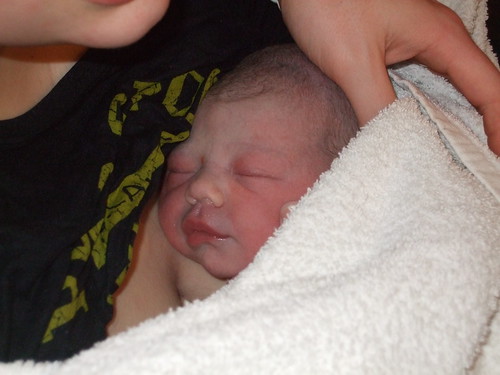
I first met Annie when my eldest daughter was about 5 days old. She visited me at home to perform her heel prick test and she unfortunately had to come back and repeat it when she was 9 days old as she just hadn't bled well enough. I opened the door to her and cried with relief at seeing her. Now I shall talk in more detail about breastfeeding later but on day 9, I was at the end of my tether with breastfeeding. I was sore, my nipples were cracked and bleeding, I was incredibly engorged and I had a baby that wanted to be constantly feeding. Annie helped me to get her latched properly, and encouraged me to attend the breastfeeding support group later on that day. So later on that day I managed, somehow, to get myself out the door and down to the group. I shan't bang on about the group now, as I will cover it in more detail when I talk about breastfeeding, but Annie ran this group so amazingly well. She'd manage to balance supporting women, without ever judging them or pressuring them. She knew when it would help for someone to have a peer supporter provide one on one support and when someone needed more. When Annie ran the group we had a thriving membership, sometimes there weren't enough chairs; yet when government funding was pulled back, it meant she was only able to drop in on the group when she could, and the running of the group fell to the peer supporters themselves. Whilst the peer supporters did a fantastic job, the membership dwindled considerably. It was down to Annie and that group that led me to breastfeed as long as I did, as well as myself of course.
I can't remember when exactly I first met Jo as she'd sometimes come along to the breastfeeding group, though that was more Annie's domain, or whether or not it was at the Baby Massage class that she ran. Jo has a wealth of knowledge on many many subjects not just midwifery related and I believe she has recently completed her Masters.
Together Jo and Annie ran the antenatal group/drop in. They were much like the antenatal classes run by the hospitals in some ways but far far better. They would cover all the usual topics you'd expect at, such as pain relief, positions in labour, instrumental deliveries, episiotomies etc. However what made this group so fantastic is that there was no limit on how often you attended. When I fell pregnant with my second daughter, I attended early on following some bleeding I had and then more regularly from around 28 weeks. It meant that you got to know the others that attended, some would be further along than you, and some would be earlier in pregnancy. When I attended the hospital classes when I was pregnant with my first daughter, we had one of those awkward get to know each other games and everyone was uncomfortable. At drop-in, as I shall call it, we did always introduce ourselves and although it was always a little bit uncomfortable, it got it over and done with, not to mention once you'd been a few times you found it easy. It also gave you a chance to say what had been going on with you that week, to raise something that might be worrying you, to moan about work or relatives. And it always felt like someone else had been through the same or was currently experiencing the same and that made for a very reassuring environment. So Annie and Jo provided this opportunity to access the information we needed, time to speak to a midwife but also time to speak with our peers. Separately they are both brilliant but together they are the best!
When I fell pregnant with my second daughter it was only natural to me to book with Annie. I saw her every week at the breastfeeding group and I felt so comfortable with her. Throughout my pregnancy I saw either Annie or Jo and got to know them both so much more. They gave me the confidence and the information to choose a home water birth. It was the ultimate joy when it was Annie and Jo that were present for the birth of my 2nd born. My first daughter was delivered by the midwives, my second daughter was delivered by me. Annie and Jo helped that to happen and in the case of a normal birth, this is how it should happen. The best part of this is, it's not only me they have this effect on. Amongst my friends, I can see how many they have empowered in their births....whether they were home births, Cesarean sections, instrumental deliveries or inductions....Annie and Jo inspired them all.
If I can be half as good a midwife as either of them, I shall be proud. I feel honoured to have known them, and words can't describe how I lucky I feel to have had them at the birth of my second daughter.
Sunday, 10 October 2010
Towards the end of placement now
I shall soon be going back into Uni, sitting my first exam, submitting my first assignment and doing a drugs calculation test. It already feels like I've come a long way since May and whilst I still have a long way to go, I am pleased with what I have already learnt. I've really enjoyed being able to apply some of the things we learnt in University to placement and I can definitely say some things were a lot easier to understand when we applied them to real women.
So what have I learnt so far? I've learnt about the importance of using the correct professional terminology in the notes....apparently writing "sore boobs" is not professional and yes I did do that. When pointed out to me, I was actually quite embarrassed but hey I'm here to learn after all. The other errors I made were a lot less embarrassing - thrombocytopaenia instead of low platelets is not obvious after all.
I have learnt that feeling for the top of the uterus is harder than it seems and that muscle can confuse me. Also it's important not to assume that just because the measurement doesn't appear to fit with gestation length, doesn't mean I have measured wrong. You can also move the uterus to fit what you want it to and it's obviously important not to do this. Holding the measuring tape quite tight can also affect the measurement and it seemed that I did that frequently. Women's pubic bones are at different heights and it's important to make sure you do measure from it and some women's are harder to feel than others. It's also quite surprising how many women go commando.
I feel I have also learnt how to manage my time better when talking to women. My first booking appointments I'd let women and their partners talk away but my more recent booking appointments I have been more confident to take control and move the appointment along when needed. It's important to recognised when women need to talk but it's also important to recognise when it's not necessary so to speak. Goodness knows I have the gift of the gab and can talk all day long....just ask anyone who knows me; but a community midwife has to manage her time effectively in order to fit all the appointments in.
That some days I feel quite confident and that I know what I am doing and other days I feel like my brain fell out overnight and I haven't got a clue. So on the Thursday, I "ran" the clinic. I was confidently palpating, writing notes, checking urine and blood pressures and then on Monday at clinic, I felt like I fumbled my way through, guessing rather than knowing and being very grateful that my mentor was there to confirm or correct my findings. I was assured it is quite normal to have days like this though.
I have found that many women are interested in me as a student and are very happy to be a part of their care. Before I started I wondered whether I would have anyone who would object to me being there but so far that hasn't been the case. The feedback I have been given from women and their partners has been very positive and I have been wished luck for my future from many of them. As part of my Placement Assessment Document I have to get feedback from two women and I found it quite hard to ask but both were really happy to do it for me, and gave me lovely feedback.
I have learnt the value of continuity and how much of a difference it can make to my learning and my confidence. I always knew that I'd work with a lot people when I came out on placement, I planned to make myself as useful and as amenable as possible but I completely underestimated how much it would affect me. I never thought I would get upset so early on in my training. In some ways, I think it's been an important learning curve for me and I hope that with my future placements I will know how to manage whilst working with a variety of mentors. On the other hand, I do believe that it's a common issue for student midwives and can make it harder to learn how to do things. It's certainly feedback I will take back to university but I am sure it's something they have heard time and time before.
I have also learnt how much pressure I put on myself and that my own high standards can serve to upset me if I don't reach them. When I think how embarrassed I was about writing "sore boobs" instead of breast tenderness, I also need to remember how much I have learnt. After all if my mentor is happy to come and go from the room whilst I do bookings, then she must be happy with how I am doing and confident in my abilities and therefore I shouldn't beat myself up quite so much when I make a mistake. Certainly none of the mistakes I've made have been life threatening after all.
And alongside all of this I have improved upon my clinical skills. I am now confident at taking women's blood pressures. I am no longer at a complete loss when I palpate a woman and am currently working out the baby's position correctly. I have even begun to feel for level of engagement and starting to feel that I can tell the difference. I am able to read the urine dipsticks confidently now, whereas initially I was sometimes unsure whether there was a green tinge on some of the squares or not. I am much more confident on how to locate the heartbeat and tell the difference to maternal heartbeat, and whether or not it is through the cord I can hear it.
So I have just one more week in placement and as I will be working with a different community midwife this week, my mentor completed my summative assessments and as a result gave me my final grade for the placement. I am thrilled to have passed my first placement and to now be able to enjoy my final week, seeing how another midwife works, without the pressure of getting my book signed.
So what have I learnt so far? I've learnt about the importance of using the correct professional terminology in the notes....apparently writing "sore boobs" is not professional and yes I did do that. When pointed out to me, I was actually quite embarrassed but hey I'm here to learn after all. The other errors I made were a lot less embarrassing - thrombocytopaenia instead of low platelets is not obvious after all.
I have learnt that feeling for the top of the uterus is harder than it seems and that muscle can confuse me. Also it's important not to assume that just because the measurement doesn't appear to fit with gestation length, doesn't mean I have measured wrong. You can also move the uterus to fit what you want it to and it's obviously important not to do this. Holding the measuring tape quite tight can also affect the measurement and it seemed that I did that frequently. Women's pubic bones are at different heights and it's important to make sure you do measure from it and some women's are harder to feel than others. It's also quite surprising how many women go commando.
I feel I have also learnt how to manage my time better when talking to women. My first booking appointments I'd let women and their partners talk away but my more recent booking appointments I have been more confident to take control and move the appointment along when needed. It's important to recognised when women need to talk but it's also important to recognise when it's not necessary so to speak. Goodness knows I have the gift of the gab and can talk all day long....just ask anyone who knows me; but a community midwife has to manage her time effectively in order to fit all the appointments in.
That some days I feel quite confident and that I know what I am doing and other days I feel like my brain fell out overnight and I haven't got a clue. So on the Thursday, I "ran" the clinic. I was confidently palpating, writing notes, checking urine and blood pressures and then on Monday at clinic, I felt like I fumbled my way through, guessing rather than knowing and being very grateful that my mentor was there to confirm or correct my findings. I was assured it is quite normal to have days like this though.
I have found that many women are interested in me as a student and are very happy to be a part of their care. Before I started I wondered whether I would have anyone who would object to me being there but so far that hasn't been the case. The feedback I have been given from women and their partners has been very positive and I have been wished luck for my future from many of them. As part of my Placement Assessment Document I have to get feedback from two women and I found it quite hard to ask but both were really happy to do it for me, and gave me lovely feedback.
I have learnt the value of continuity and how much of a difference it can make to my learning and my confidence. I always knew that I'd work with a lot people when I came out on placement, I planned to make myself as useful and as amenable as possible but I completely underestimated how much it would affect me. I never thought I would get upset so early on in my training. In some ways, I think it's been an important learning curve for me and I hope that with my future placements I will know how to manage whilst working with a variety of mentors. On the other hand, I do believe that it's a common issue for student midwives and can make it harder to learn how to do things. It's certainly feedback I will take back to university but I am sure it's something they have heard time and time before.
I have also learnt how much pressure I put on myself and that my own high standards can serve to upset me if I don't reach them. When I think how embarrassed I was about writing "sore boobs" instead of breast tenderness, I also need to remember how much I have learnt. After all if my mentor is happy to come and go from the room whilst I do bookings, then she must be happy with how I am doing and confident in my abilities and therefore I shouldn't beat myself up quite so much when I make a mistake. Certainly none of the mistakes I've made have been life threatening after all.
And alongside all of this I have improved upon my clinical skills. I am now confident at taking women's blood pressures. I am no longer at a complete loss when I palpate a woman and am currently working out the baby's position correctly. I have even begun to feel for level of engagement and starting to feel that I can tell the difference. I am able to read the urine dipsticks confidently now, whereas initially I was sometimes unsure whether there was a green tinge on some of the squares or not. I am much more confident on how to locate the heartbeat and tell the difference to maternal heartbeat, and whether or not it is through the cord I can hear it.
So I have just one more week in placement and as I will be working with a different community midwife this week, my mentor completed my summative assessments and as a result gave me my final grade for the placement. I am thrilled to have passed my first placement and to now be able to enjoy my final week, seeing how another midwife works, without the pressure of getting my book signed.
Tuesday, 5 October 2010
Running the clinic
On Thursday of last week we had a bit of time before the clinic began so my mentor and I sat and went through my book that I have to get signed off during my time on placement. We sat and talked about what we'd already covered and what I already knew and looked at what I didn't know. It really made me think about what we do and why and made me feel good about the things I had learnt along the way.
So my mentor then told me she was going to let me "run" the clinic. Of course she wasn't going anywhere but whereas previously she'd do the writing and most of the talking, whilst I did the urinalysis, blood pressure and we both did the palpation, this time I was going to do the lot and she'd check my palpations intermittently...particularly those that were worried about the size of their baby or had babies in awkward positions previously.
We saw around 20 women and had barely a break in between. I find I work better when it is like this - it seems to solidify my learning so much more. I think I got almost every palpation correct and I felt like I was getting to grips with measuring the height of the bump too. It really made a difference as to how I came across to the women as well I think as I am sure they can pick up when I am more uncertain about things.
For more information about what happens at antenatal clinic, you might find it useful to look at my previous post Antenatal Clinic.
Another part of being a Community Midwife is the postnatal visits to new Mums in their homes. There are three guaranteed visits that all women get. The first visit is the day after the woman and baby get home from the hospital. Around day five we visit to perform the heel prick test on the newborn and if the baby is breastfed we also weigh the baby. The final visit is usually on day ten where we discharge the woman to the Health Visitors care. Women are covered by maternity care until day twenty eight but most women won't require this. It may also be that women get more than the three visits during those first ten days but it does depend on what their needs are. For example, a lady who has just had a third baby and is comfortable with all she is doing, recovering well may well not need anymore visits. Whereas a first time Mum who is getting to grips with breastfeeding and recovering from a section would benefit from more visits. And it's not as simple as saying well she's a third time Mum she won't need us, because she might, so it's looked at from an individual basis.
We ask the woman about her bleeding and how she is feeling in general. The reason for this is because sometimes after giving birth there can be retained products - parts of placenta or membranes. The uterus may expel them naturally but the last thing we want is for the woman to get an infection. If the Mum has increased bleeding combined with a temperature then we'd be palpating the uterus to check it's contracting down as expected. If the uterus is "spongy" then it's an indication that something could be going on and we'd send the Mum and baby back into the hospital to be checked over. Sometimes women have heavier bleeding if they've been more active, or just after they have been breastfeeding or also when she gets up after a long period of lying still so heavier bleeding on it's own is not an indication of anything to worry about. Similarly it's quite normal to have a temperature when the milk comes in so it's vital to look at the whole picture.
We also ask the women about their toilet habits....yes Midwives are obsessed with wee and poo! The reason for asking is quite simple. The bladder, uterus and bowel are all very close together and the bladder can be damaged and lead to urine retention. It is common for many women not to have a bowel movement until day 4 or 5 but we ask about it because women can be very nervous about it, particularly if they have stitches. So it provides the opportunity to reassure them. Also we want to avoid women becoming constipated and so we can talk about ways to avoid this.
We also ask whether or not their breasts are comfortable whether or not they are breastfeeding. This is because almost every woman will have milk come in regardless of whether they choose to breastfeed or not. This gives breastfeeding mothers to talk about any concerns they may have about position and latch, frequency of feeding and so on. We can also talk to bottle feeding mothers about how to cope with the pain and the engorgement as quickly as possible. We also like to ensure that women are eating, drinking and sleeping - well sleeping as well as they can considering they have a newborn. The body needs food, water and rest in order to produce milk but also the women need the opportunity to recover from the birth.
We ask about how the women are feeling emotionally. We can reassure women that it's normal for emotions to be all over the place after giving birth but we also want to be aware of any women who might be at risk of postnatal depression. Postnatal women are at risk of deep vein thrombosis so we ask if they have any pains in their legs and this is particularly important with women who have had a Cesarean section. We also make sure that women are aware of their postnatal exercises.
Of course we also check the baby over. We look at their temperature, frequency of feeding, whether or not the cord has come off yet, how their nappies are and how frequently they are needing changing, and we also look at their skin. Newborn babies often have very dry skin which is normal but we can advise women on what to do to prevent it becoming sore, cracked and potentially infected. We recommend olive oil as it's a natural substance and won't harm a baby's delicate skin. The other thing we have to look out for is any bruising or fingertip marks. I am thankful that this is not something I have seen.
So my mentor then told me she was going to let me "run" the clinic. Of course she wasn't going anywhere but whereas previously she'd do the writing and most of the talking, whilst I did the urinalysis, blood pressure and we both did the palpation, this time I was going to do the lot and she'd check my palpations intermittently...particularly those that were worried about the size of their baby or had babies in awkward positions previously.
We saw around 20 women and had barely a break in between. I find I work better when it is like this - it seems to solidify my learning so much more. I think I got almost every palpation correct and I felt like I was getting to grips with measuring the height of the bump too. It really made a difference as to how I came across to the women as well I think as I am sure they can pick up when I am more uncertain about things.
For more information about what happens at antenatal clinic, you might find it useful to look at my previous post Antenatal Clinic.
Another part of being a Community Midwife is the postnatal visits to new Mums in their homes. There are three guaranteed visits that all women get. The first visit is the day after the woman and baby get home from the hospital. Around day five we visit to perform the heel prick test on the newborn and if the baby is breastfed we also weigh the baby. The final visit is usually on day ten where we discharge the woman to the Health Visitors care. Women are covered by maternity care until day twenty eight but most women won't require this. It may also be that women get more than the three visits during those first ten days but it does depend on what their needs are. For example, a lady who has just had a third baby and is comfortable with all she is doing, recovering well may well not need anymore visits. Whereas a first time Mum who is getting to grips with breastfeeding and recovering from a section would benefit from more visits. And it's not as simple as saying well she's a third time Mum she won't need us, because she might, so it's looked at from an individual basis.
We ask the woman about her bleeding and how she is feeling in general. The reason for this is because sometimes after giving birth there can be retained products - parts of placenta or membranes. The uterus may expel them naturally but the last thing we want is for the woman to get an infection. If the Mum has increased bleeding combined with a temperature then we'd be palpating the uterus to check it's contracting down as expected. If the uterus is "spongy" then it's an indication that something could be going on and we'd send the Mum and baby back into the hospital to be checked over. Sometimes women have heavier bleeding if they've been more active, or just after they have been breastfeeding or also when she gets up after a long period of lying still so heavier bleeding on it's own is not an indication of anything to worry about. Similarly it's quite normal to have a temperature when the milk comes in so it's vital to look at the whole picture.
We also ask the women about their toilet habits....yes Midwives are obsessed with wee and poo! The reason for asking is quite simple. The bladder, uterus and bowel are all very close together and the bladder can be damaged and lead to urine retention. It is common for many women not to have a bowel movement until day 4 or 5 but we ask about it because women can be very nervous about it, particularly if they have stitches. So it provides the opportunity to reassure them. Also we want to avoid women becoming constipated and so we can talk about ways to avoid this.
We also ask whether or not their breasts are comfortable whether or not they are breastfeeding. This is because almost every woman will have milk come in regardless of whether they choose to breastfeed or not. This gives breastfeeding mothers to talk about any concerns they may have about position and latch, frequency of feeding and so on. We can also talk to bottle feeding mothers about how to cope with the pain and the engorgement as quickly as possible. We also like to ensure that women are eating, drinking and sleeping - well sleeping as well as they can considering they have a newborn. The body needs food, water and rest in order to produce milk but also the women need the opportunity to recover from the birth.
We ask about how the women are feeling emotionally. We can reassure women that it's normal for emotions to be all over the place after giving birth but we also want to be aware of any women who might be at risk of postnatal depression. Postnatal women are at risk of deep vein thrombosis so we ask if they have any pains in their legs and this is particularly important with women who have had a Cesarean section. We also make sure that women are aware of their postnatal exercises.
Of course we also check the baby over. We look at their temperature, frequency of feeding, whether or not the cord has come off yet, how their nappies are and how frequently they are needing changing, and we also look at their skin. Newborn babies often have very dry skin which is normal but we can advise women on what to do to prevent it becoming sore, cracked and potentially infected. We recommend olive oil as it's a natural substance and won't harm a baby's delicate skin. The other thing we have to look out for is any bruising or fingertip marks. I am thankful that this is not something I have seen.
Tuesday, 28 September 2010
So what does it all mean?
You get back from your appointment and glance through your notes and there are all these abbreviations that you have no idea what they mean. I'm going to now do my best to explain some of the most commonly used abbreviations or terms but if there is one that you've had that you want to know..just leave me a message and I'll do my best!
ANC - antenatal clinic - may be used to let you know where you next appointment is.
ARM - artificial rupture of membranes which is when they break your waters for you. Generally done to encourage/speed along progress in labour.
BBA - born before arrival. Those babies that don't want to wait for the midwife to arrive or the labour takes Mum completely off guard and end up being born in a car park (mentioning no names here). Anyway it means that no midwife was in attendance for the birth.
BMI - body mass index. Something that most of us don't like but it is your weight in kgs divided by height in metres squared. A healthy BMI is 20-25.
BP - blood pressure. We all know it's recorded but do you know what it actually tells us? The top figure, the larger number is the systolic measurement. This tells us the maximum amount of pressure during contraction of the ventricles. The lower figure is the diastolic measurement and this tells us the pressure in the ventricle at rest.
BPD - seen this on your scan reports? This is the biparietal diameter which is essentially a measurement of your baby's head. The parietal eminences are the two "points" (it may help to feel your own skull lol) on the top of your head - one on the left and one on the right. The sonographer can use this measurement to estimate within about a week, the gestational age of the baby.
CRL - again seen on scan reports. This is the crown rump length....exactly as it sounds it is the measurement of the baby from the top of the baby's skull down to the bottom of the spine. Also used to asses the gestational age of the baby.
CTG - cardiotocograph. The machine that is used to monitor your baby. Either in the fetal assessment unit or during labour.
ECV - external cephalic version. This is the manoeuvre they use to try and turn a breech or transverse baby into the head down position.
Engagement - this can be very confusing as it depends on the midwife writing it as to which way they mean. Some will write 2/5ths and this will mean that they can feel 2/5ths of the baby's head, meaning the baby is 3/5ths engaged. Others will mean that they can feel 3/5ths and so is 2/5ths engaged. One thing I would say is, 2/5ths or 3/5ths it doesn't really matter. What matters is there is a degree of engagement. The baby's head may well not engage any further anyway if there is some of the waters in front of their head, blocking them from dropping further into the pelvis.
FHHR - I am sure most of you have worked out that this means the baby's heart has been heard but can you work out exactly what it stands for? It means fetal heart (heard and regular).
FMF - fetal movements felt.
Gravida - either a primigravida or a multigravida. A primigravida is a woman who is pregnant for the first time and a multigravida is a woman who is pregnant for the second or more time.
GBS - group B streptococcus. This is a bacteria found in either the rectum or the vagina of approximately a quarter of all pregnant women. It can cause an infection in the baby, and in rare cases death of a baby so it is commonly treated with antibiotics during labour to reduce those risks.
GTT - glucose tolerance test. The test that checks for gestational diabetes. It is more commonly found in women who have a high BMI and/or a family history of diabetes.
IOL - induction of labour.
IUGR - intrauterine growth restriction. This basically means that the baby is anticipated to be a small baby...where perhaps the baby has stopped growing, or is growing more slowly which can indicate that the placenta isn't working as well as it should be.
LMA (RMA) - left (right) mentoanterior . This would be in reference to the position your baby is in. So the mento refers to the baby's chin; so in this case the chin is to the left of the pelvis and facing towards the front of the woman's pelvis and the baby is going to be born face first. This would only be detected by a vaginal examination, as externally you cannot feel which position the baby's head is in.
LMP (RMP) - left (right) mentoposterior. As above but the chin is facing to the back of the woman's pelvis. Again would still be a case of the baby being born face first.
LOA (ROA) - left (right) occipitoanterior. This, whether left or right, is the more ideal position for the baby to be in. It means that the occiput, which is the bone on the very back of the baby's skull, is facing towards the front of the woman's pelvis. The baby has tucked it's head right down onto it's body and is therefore presenting the smallest diameter to be born. (Imagine you are putting on a jumper with a tight neck, you wouldn't try and push your face through, you tuck your head down onto your chest)
LOP (ROP)- left (right) occipitoposterior. As above but the baby's occiput
LSP (RSP)- left (right) sacroposterior. This means that the baby is in a breech position and facing to the back of the woman.
MSU - midstream specimen of urine
NAD - nothing abnormal detected....always good to see
NT - nuchal translucency. This is the part of the scan when they are screening for Downs Syndrome and other disorders. They measure the skin at the fold at the back of the neck. This is most commonly used alongside a blood test to give a more accurate risk factor.
PG - prostaglandin. The hormone that is used in induction of labour.
PPH - postpartum haemorrhage. Bleeding to excess following the delivery of the baby.
SFD - small for dates.
SOB - shortness of breath.
SPD - symphisis pubis diastasis.Causes moderate to severe pelvic pain during pregnancy due to the relaxin hormone.
SRM - spontaneous rupture of membranes.
SVD - spontaneous vaginal delivery.
Transverse - the baby instead of being head down or even breech, is instead lying across the abdomen. This can result in a more unusual shaped bump. Fairly obviously if the baby is in this position at term, and any attempts to turn the baby have failed, this would mean a Cesarean section as the baby simply won't fit into the pelvis. This can often happen in women who have an unusual shape to their uterus e.g some women have a heart shaped uterus.
UTI - urinary tract infection.
I have no doubt missed plenty out but please do shout and I will try and clear them up for you!
ANC - antenatal clinic - may be used to let you know where you next appointment is.
ARM - artificial rupture of membranes which is when they break your waters for you. Generally done to encourage/speed along progress in labour.
BBA - born before arrival. Those babies that don't want to wait for the midwife to arrive or the labour takes Mum completely off guard and end up being born in a car park (mentioning no names here). Anyway it means that no midwife was in attendance for the birth.
BMI - body mass index. Something that most of us don't like but it is your weight in kgs divided by height in metres squared. A healthy BMI is 20-25.
BP - blood pressure. We all know it's recorded but do you know what it actually tells us? The top figure, the larger number is the systolic measurement. This tells us the maximum amount of pressure during contraction of the ventricles. The lower figure is the diastolic measurement and this tells us the pressure in the ventricle at rest.
BPD - seen this on your scan reports? This is the biparietal diameter which is essentially a measurement of your baby's head. The parietal eminences are the two "points" (it may help to feel your own skull lol) on the top of your head - one on the left and one on the right. The sonographer can use this measurement to estimate within about a week, the gestational age of the baby.
CRL - again seen on scan reports. This is the crown rump length....exactly as it sounds it is the measurement of the baby from the top of the baby's skull down to the bottom of the spine. Also used to asses the gestational age of the baby.
CTG - cardiotocograph. The machine that is used to monitor your baby. Either in the fetal assessment unit or during labour.
ECV - external cephalic version. This is the manoeuvre they use to try and turn a breech or transverse baby into the head down position.
Engagement - this can be very confusing as it depends on the midwife writing it as to which way they mean. Some will write 2/5ths and this will mean that they can feel 2/5ths of the baby's head, meaning the baby is 3/5ths engaged. Others will mean that they can feel 3/5ths and so is 2/5ths engaged. One thing I would say is, 2/5ths or 3/5ths it doesn't really matter. What matters is there is a degree of engagement. The baby's head may well not engage any further anyway if there is some of the waters in front of their head, blocking them from dropping further into the pelvis.
FHHR - I am sure most of you have worked out that this means the baby's heart has been heard but can you work out exactly what it stands for? It means fetal heart (heard and regular).
FMF - fetal movements felt.
Gravida - either a primigravida or a multigravida. A primigravida is a woman who is pregnant for the first time and a multigravida is a woman who is pregnant for the second or more time.
GBS - group B streptococcus. This is a bacteria found in either the rectum or the vagina of approximately a quarter of all pregnant women. It can cause an infection in the baby, and in rare cases death of a baby so it is commonly treated with antibiotics during labour to reduce those risks.
GTT - glucose tolerance test. The test that checks for gestational diabetes. It is more commonly found in women who have a high BMI and/or a family history of diabetes.
IOL - induction of labour.
IUGR - intrauterine growth restriction. This basically means that the baby is anticipated to be a small baby...where perhaps the baby has stopped growing, or is growing more slowly which can indicate that the placenta isn't working as well as it should be.
LMA (RMA) - left (right) mentoanterior . This would be in reference to the position your baby is in. So the mento refers to the baby's chin; so in this case the chin is to the left of the pelvis and facing towards the front of the woman's pelvis and the baby is going to be born face first. This would only be detected by a vaginal examination, as externally you cannot feel which position the baby's head is in.
LMP (RMP) - left (right) mentoposterior. As above but the chin is facing to the back of the woman's pelvis. Again would still be a case of the baby being born face first.
LOA (ROA) - left (right) occipitoanterior. This, whether left or right, is the more ideal position for the baby to be in. It means that the occiput, which is the bone on the very back of the baby's skull, is facing towards the front of the woman's pelvis. The baby has tucked it's head right down onto it's body and is therefore presenting the smallest diameter to be born. (Imagine you are putting on a jumper with a tight neck, you wouldn't try and push your face through, you tuck your head down onto your chest)
LOP (ROP)- left (right) occipitoposterior. As above but the baby's occiput
LSP (RSP)- left (right) sacroposterior. This means that the baby is in a breech position and facing to the back of the woman.
MSU - midstream specimen of urine
NAD - nothing abnormal detected....always good to see
NT - nuchal translucency. This is the part of the scan when they are screening for Downs Syndrome and other disorders. They measure the skin at the fold at the back of the neck. This is most commonly used alongside a blood test to give a more accurate risk factor.
PG - prostaglandin. The hormone that is used in induction of labour.
PPH - postpartum haemorrhage. Bleeding to excess following the delivery of the baby.
SFD - small for dates.
SOB - shortness of breath.
SPD - symphisis pubis diastasis.Causes moderate to severe pelvic pain during pregnancy due to the relaxin hormone.
SRM - spontaneous rupture of membranes.
SVD - spontaneous vaginal delivery.
Transverse - the baby instead of being head down or even breech, is instead lying across the abdomen. This can result in a more unusual shaped bump. Fairly obviously if the baby is in this position at term, and any attempts to turn the baby have failed, this would mean a Cesarean section as the baby simply won't fit into the pelvis. This can often happen in women who have an unusual shape to their uterus e.g some women have a heart shaped uterus.
UTI - urinary tract infection.
I have no doubt missed plenty out but please do shout and I will try and clear them up for you!
Wednesday, 22 September 2010
Antenatal Clinic
Every week the midwife I am working with runs an antenatal clinic. This is not a drop in clinic like you have with the Health Visitors but appointments made in advance. At the booking appointment, it is decided whether or not the woman will have consultant led care or midwife led care. It may well be that she only actually sees the consultant once during her pregnancy but the next appointment after the booking appointment is at the hospital so that she can see a consultant as well; this appointment is at approximately 16 weeks of pregnancy. If the woman is under midwife led care then the next appointment will be at the antenatal clinic run by the midwife at the children's centre.
So what is it that happens at these appointments and why? Well in part it's an opportunity for the woman to ask any questions she has - whether they are about labour, or something she has been experiencing in pregnancy. It's also a vital appointment for the midwife to make some important checks. So at each appointment the woman's urine is tested for glucose and protein; and depending on the dipsticks being used it may also be tested for leukocytes, blood and ketones. Glucose may show up in the urine if the woman has eaten a lot of sugar prior to providing the specimen but it can also be an indicator for gestational diabetes. Protein can be a side effect of discharge but can also be an early indication of pre-eclampsia. Leukocytes and blood can indicate a urine infection. Ketones in your urine indicate that you are burning fat which could just mean you're hungry and need to eat something; they are often present in women who are suffering from morning sickness or hyperemesis. The main thing to be careful of is dehydration in this case. However if the woman is diabetic then the presence of Ketones is an indication that glucose levels are too high and there is not enough insulin.
Blood pressure is also monitored - it is taken at the booking appointment and at every appointment thereafter. High blood pressure can be an indication of pre-eclampsia but it can also be a side effect of hot weather. In the 2nd trimester it is quite common for blood pressure to drop and for women to suffer low blood pressure. It's always important not to just look at blood pressure results on their own but to look at the whole picture - one high result with no other symptoms is not necessarily a concern. Whereas a result that may be within normal guidelines but is high for that woman who is also showing protein in her urine is a concern. In this
circumstance, the woman would be sent to the hospital for monitoring or a blood test or both.
The other part of the antenatal appointment is measuring the woman's bump, checking the baby's position and listening in to the heartbeat. The bump is measured after 16 weeks of pregnancy to ensure that the baby is growing and that the baby is, to the best you can tell, growing accordingly to gestation. The position can generally be ascertained from around 28 weeks. This can sometimes provide an answer for women experiencing a lot of back pain and confirm whether they can feel feet or a bottom. At around 34 weeks it is hoped that the baby will be in the ideal position for birth but prior to that the baby can be in any position it likes. Identifying the position of the baby also helps to find the best place to find the heartbeat. Hearing the heartbeat gives reassurance to the mother but also provides the midwife with an indication of how the baby is doing.
So this gives you just a glimpse into what may seem so routine but is actually so very important. For most pregnant women, all the checks are normal and are reassurance but a midwife is there for them too as well as those for whom it is most definitely not routine. Something that women often find after their appointment is that when they read through their notes they don't always understand what has been written so next time I'll cover those abbreviations and what they really mean.
So what is it that happens at these appointments and why? Well in part it's an opportunity for the woman to ask any questions she has - whether they are about labour, or something she has been experiencing in pregnancy. It's also a vital appointment for the midwife to make some important checks. So at each appointment the woman's urine is tested for glucose and protein; and depending on the dipsticks being used it may also be tested for leukocytes, blood and ketones. Glucose may show up in the urine if the woman has eaten a lot of sugar prior to providing the specimen but it can also be an indicator for gestational diabetes. Protein can be a side effect of discharge but can also be an early indication of pre-eclampsia. Leukocytes and blood can indicate a urine infection. Ketones in your urine indicate that you are burning fat which could just mean you're hungry and need to eat something; they are often present in women who are suffering from morning sickness or hyperemesis. The main thing to be careful of is dehydration in this case. However if the woman is diabetic then the presence of Ketones is an indication that glucose levels are too high and there is not enough insulin.
Blood pressure is also monitored - it is taken at the booking appointment and at every appointment thereafter. High blood pressure can be an indication of pre-eclampsia but it can also be a side effect of hot weather. In the 2nd trimester it is quite common for blood pressure to drop and for women to suffer low blood pressure. It's always important not to just look at blood pressure results on their own but to look at the whole picture - one high result with no other symptoms is not necessarily a concern. Whereas a result that may be within normal guidelines but is high for that woman who is also showing protein in her urine is a concern. In this
circumstance, the woman would be sent to the hospital for monitoring or a blood test or both.
The other part of the antenatal appointment is measuring the woman's bump, checking the baby's position and listening in to the heartbeat. The bump is measured after 16 weeks of pregnancy to ensure that the baby is growing and that the baby is, to the best you can tell, growing accordingly to gestation. The position can generally be ascertained from around 28 weeks. This can sometimes provide an answer for women experiencing a lot of back pain and confirm whether they can feel feet or a bottom. At around 34 weeks it is hoped that the baby will be in the ideal position for birth but prior to that the baby can be in any position it likes. Identifying the position of the baby also helps to find the best place to find the heartbeat. Hearing the heartbeat gives reassurance to the mother but also provides the midwife with an indication of how the baby is doing.
So this gives you just a glimpse into what may seem so routine but is actually so very important. For most pregnant women, all the checks are normal and are reassurance but a midwife is there for them too as well as those for whom it is most definitely not routine. Something that women often find after their appointment is that when they read through their notes they don't always understand what has been written so next time I'll cover those abbreviations and what they really mean.
Monday, 30 August 2010
And into Community I go....
No not Community service before anyone makes the joke! I shall for the next 6 weeks be working alongside a Community midwife and getting a glimpse of the work that they do.
A week before I was due to go out I rang my Community mentor to arrange where I was going to meet her. Unfortunately her response was not what I expected "well you won't be meeting me, I'm on annual leave for two weeks, back in for two weeks and then off again for two weeks, I don't know why they gave me a student".....which left me with a goldfish look on my face and thinking "oh no here we go again". Though to her credit she did sort it out within a couple of hours, and a midwife in her team rang to arrange for me to go out with her instead. So already it was a big improvement as I hadn't had to sort it out myself.
So fast forward to Thursday and my first shift out with my new mentor and I was feeling quite nervous. She put me instantly at ease and chatted with me about what I thought a Community Midwife did. We then went out to some postnatal home visits where she got me just to observe; a few discharges and a heel prick later and I was done for the day. She had another visit to do but as a really sensitive one, she decided not to take me with her. So I took the opportunity to go to the library and get some work done on my assignment.
The next day I met her at the clinic where we booked in three women who were between 8-10 weeks pregnant. I observed the first two and then she let me book in the third lady. I was really pleased that she gave me the opportunity so quickly but also that she supported me in it. She was right on hand to help me should I need it, but she also wasn't looking over my shoulder and making me nervous. It meant I felt completely comfortable, knowing she wouldn't let me make a silly mistake, or miss something out and that she was there to provide the more detailed information about the blood tests that I don't know yet. After finishing at the clinic we had just one visit and again we were done for the day. Two half days....I could get used to this lol.
I opted to work the Saturday as well as my mentor wasn't working the Bank Holiday Monday and I'd end up short on my hours. We had 6 visits in total to do, which included one discharge and five heel pricks. I'd already been told that she'd be letting me do the heel pricks as it would be good experience to do so many at once. So we started off at the hospital to put the ladies we'd booked the day before onto the computer system. The first two went like clockwork and then on the third the computer did something strange and was trying to add an additional pregnancy that the lady had never had. So it took us a little while to sort that out and whilst doing that my mentor received a phone call about another lady that needed to be seen. We went to see her first and whilst we were there, my mentor could find no record of the baby having had her heel prick test done - she'd been back into the hospital and on antibiotics and on discussion with the hospital, it appeared not to have been done. So this resulted is us being in this lady's house for rather longer than anticipated. It also meant we didn't have enough heel prick kits with us so we'd need to go back to the hospital.
The next few visits were fine and I did the heel prick test on the babies whilst my mentor filled in the paperwork. In case you don't know what the heel prick test is, you can read more about it here
https://www.bbc.co.uk/health/physical_health/conditions/phenylketonuria1.shtml
The test itself is really simple....even more simple than when they did them on my own babies at 2 1/2 and 4 1/2 years ago - they use a little blade rather than a needle and it's very simple to use. It was a nice thing to check off my list as having done.
We completed all of our visits, including returning to the hospital to collect an extra heel prick kit and an extra visit that had been requested by someone in a bit of pain postnatally. So by the time we eventually finished for the day it was 4 pm, which for a Saturday was a long day. On the plus side I got lots of practice at doing the heel prick test, lots of time to chat with my mentor, some time in a mental health facility (not as an inmate!) where I waited in the office whilst my mentor carried out an antenatal - very sensitive situation so I won't be discussing it on my blog. I am getting on so well with my mentor that I asked her if it would be possible to stay with her for the remainder of my placement period this semester; it seems daft to switch to my original named mentor for just one week. She seems equally as happy with me and said she would ask her team leader if it was possible so I am keeping my fingers crossed. it would be brilliant to have some continuity.
A week before I was due to go out I rang my Community mentor to arrange where I was going to meet her. Unfortunately her response was not what I expected "well you won't be meeting me, I'm on annual leave for two weeks, back in for two weeks and then off again for two weeks, I don't know why they gave me a student".....which left me with a goldfish look on my face and thinking "oh no here we go again". Though to her credit she did sort it out within a couple of hours, and a midwife in her team rang to arrange for me to go out with her instead. So already it was a big improvement as I hadn't had to sort it out myself.
So fast forward to Thursday and my first shift out with my new mentor and I was feeling quite nervous. She put me instantly at ease and chatted with me about what I thought a Community Midwife did. We then went out to some postnatal home visits where she got me just to observe; a few discharges and a heel prick later and I was done for the day. She had another visit to do but as a really sensitive one, she decided not to take me with her. So I took the opportunity to go to the library and get some work done on my assignment.
The next day I met her at the clinic where we booked in three women who were between 8-10 weeks pregnant. I observed the first two and then she let me book in the third lady. I was really pleased that she gave me the opportunity so quickly but also that she supported me in it. She was right on hand to help me should I need it, but she also wasn't looking over my shoulder and making me nervous. It meant I felt completely comfortable, knowing she wouldn't let me make a silly mistake, or miss something out and that she was there to provide the more detailed information about the blood tests that I don't know yet. After finishing at the clinic we had just one visit and again we were done for the day. Two half days....I could get used to this lol.
I opted to work the Saturday as well as my mentor wasn't working the Bank Holiday Monday and I'd end up short on my hours. We had 6 visits in total to do, which included one discharge and five heel pricks. I'd already been told that she'd be letting me do the heel pricks as it would be good experience to do so many at once. So we started off at the hospital to put the ladies we'd booked the day before onto the computer system. The first two went like clockwork and then on the third the computer did something strange and was trying to add an additional pregnancy that the lady had never had. So it took us a little while to sort that out and whilst doing that my mentor received a phone call about another lady that needed to be seen. We went to see her first and whilst we were there, my mentor could find no record of the baby having had her heel prick test done - she'd been back into the hospital and on antibiotics and on discussion with the hospital, it appeared not to have been done. So this resulted is us being in this lady's house for rather longer than anticipated. It also meant we didn't have enough heel prick kits with us so we'd need to go back to the hospital.
The next few visits were fine and I did the heel prick test on the babies whilst my mentor filled in the paperwork. In case you don't know what the heel prick test is, you can read more about it here
https://www.bbc.co.uk/health/physical_health/conditions/phenylketonuria1.shtml
The test itself is really simple....even more simple than when they did them on my own babies at 2 1/2 and 4 1/2 years ago - they use a little blade rather than a needle and it's very simple to use. It was a nice thing to check off my list as having done.
We completed all of our visits, including returning to the hospital to collect an extra heel prick kit and an extra visit that had been requested by someone in a bit of pain postnatally. So by the time we eventually finished for the day it was 4 pm, which for a Saturday was a long day. On the plus side I got lots of practice at doing the heel prick test, lots of time to chat with my mentor, some time in a mental health facility (not as an inmate!) where I waited in the office whilst my mentor carried out an antenatal - very sensitive situation so I won't be discussing it on my blog. I am getting on so well with my mentor that I asked her if it would be possible to stay with her for the remainder of my placement period this semester; it seems daft to switch to my original named mentor for just one week. She seems equally as happy with me and said she would ask her team leader if it was possible so I am keeping my fingers crossed. it would be brilliant to have some continuity.
Thursday, 26 August 2010
Academics and assignments
A common question I have been asked is how I am coping with the academic side of my course, especially with two young children to distract me at home. I made some decisions before starting the course about how I would manage my time. At school I was the type of person to leave everything to the last minute and then not do it very well; but since I've grown up and now that I am doing things I am genuinely interested in, I find that I actually look forward to doing my work and the thought of leaving things just scares me. So I've been organising myself really well; starting my wider reading early, getting an early start on my assignments and typing up my notes from lectures. I'm not a swot, I just know I have to work hard if I want to be a midwife and that it's the academic side that will challenge me the most.
One of the best things I have done so far is to never attempt to study at home. I always go to the library. When we have a day at Uni where we finish at lunchtime, I stay for a few hours and study. If we have a long gap between lectures, I go to the library. If I didn't have children of my own, I have absolutely no doubt that I'd be doing things differently but you have to find what works for you. I am extremely lucky in that I have a husband who is extremely supportive and understands that I need time at the library even when he hasn't seen me much. I find at the library I instantly put myself in study mode, I can concentrate far more easily as there isn't anything to distract me. The Uni libraries are wonderful too; I can use the books whilst I am there, the Internet to look at journals and search the web for information. I have even found YouTube a great resource for studying some of the biology - there are some brilliant videos showing exactly how the blood flow works in the heart and around the body - this has really helped me a lot.
So the last three days were spent in Uni and I can tell you straight it was a complete shock to the system after three weeks holiday. We were in with back to back lectures from 9-6 every day apart from an hours break for lunch. And if that wasn't bad enough, for each lecture we were at opposite ends of the campus so it was a speedy walk between each lecture too. It was all very intense with lots of talk about our upcoming assignments and exams. And so the reality has hit for quite a few of my year group and lots of people are starting to worry about our first assignment which is due in October. Having already started mine I'm certainly not feeling too stressed yet but I am also fully aware that I will re-read and re-write it many many times so I need that head start.
It was wonderful to catch up with my fellow midwifery students and found out how they were all getting on in their placements. We've already had such a variety of experiences and it seems we are all enjoying the work we are getting to do; which is of course the most important part. So now I am off into the Community part of my placement and I'm really looking forward to it. I am hoping to get lots of experience at booking women in and doing their antenatal checks and of course if there is a home birth - well that would be fantastic but I won't be holding my breath!
One of the best things I have done so far is to never attempt to study at home. I always go to the library. When we have a day at Uni where we finish at lunchtime, I stay for a few hours and study. If we have a long gap between lectures, I go to the library. If I didn't have children of my own, I have absolutely no doubt that I'd be doing things differently but you have to find what works for you. I am extremely lucky in that I have a husband who is extremely supportive and understands that I need time at the library even when he hasn't seen me much. I find at the library I instantly put myself in study mode, I can concentrate far more easily as there isn't anything to distract me. The Uni libraries are wonderful too; I can use the books whilst I am there, the Internet to look at journals and search the web for information. I have even found YouTube a great resource for studying some of the biology - there are some brilliant videos showing exactly how the blood flow works in the heart and around the body - this has really helped me a lot.
So the last three days were spent in Uni and I can tell you straight it was a complete shock to the system after three weeks holiday. We were in with back to back lectures from 9-6 every day apart from an hours break for lunch. And if that wasn't bad enough, for each lecture we were at opposite ends of the campus so it was a speedy walk between each lecture too. It was all very intense with lots of talk about our upcoming assignments and exams. And so the reality has hit for quite a few of my year group and lots of people are starting to worry about our first assignment which is due in October. Having already started mine I'm certainly not feeling too stressed yet but I am also fully aware that I will re-read and re-write it many many times so I need that head start.
It was wonderful to catch up with my fellow midwifery students and found out how they were all getting on in their placements. We've already had such a variety of experiences and it seems we are all enjoying the work we are getting to do; which is of course the most important part. So now I am off into the Community part of my placement and I'm really looking forward to it. I am hoping to get lots of experience at booking women in and doing their antenatal checks and of course if there is a home birth - well that would be fantastic but I won't be holding my breath!
Friday, 20 August 2010
25 weeks pregnant

I shared a photo of this beautiful bump a few weeks ago. The lovely lady it belongs to is a very special person who has also played a part in my journey to becoming a midwife.
I first met Sam at a breastfeeding support group that we both attended. I didn't know much about her other than she had a little girl who didn't seem too much younger than my own. Over time we got to know each other better and I discovered that her daughter was in fact her second child, and that she'd also had a son. Malachi should be 5 now but in very tragic circumstances, Sam lost her precious baby boy when he was just weeks old.
Sam now has two beautiful daughters and a fourth baby on the way. She is a passionate, loving mother with very strong beliefs. She's not afraid to speak her mind and knows exactly what is right for her and her children. She is hoping for a second boy this time, but I have no doubts at all, whether boy or girl, this baby is truly lucky to be blessed by Sam as a mother.
During Sam's third pregnancy, she attended the same antenatal group that I did, run by two midwives. And as with me, she was lucky to have these very same midwives present for the home birth of her third child. They'd known Sam since the birth of Malachi and it's hard to put into words exactly how much they mean to Sam. So for them to be there for that birth was truly magical.
When I listened to Sam talk about the support, encouragement and love from these two inspirational women; it again affirmed exactly what I wanted to do. To be able to comfort someone in the depths of so much pain is truly a gift and both Sam and I have been so lucky to not only know these women, but to also have had them empower our labour and birth experiences.
I shall devote a blog post to these two midwives soon, to try and give you an inkling of why they are so special....but for now you'll just have to take my word for it.
Also Sam has recently started her own blog to share with you her journey...please do read and follow...
http://mummyspam1985.blogspot.com/
Wednesday, 4 August 2010
Ten tiny toes

Ten very important tiny toes. The two mothers of these tiny babies have played a part already in my midwifery journey.
On the 1st December 2008 a baby boy was born, big brother to the little girl in my picture. Sadly this much longed for baby boy lived for just 11 hours. The reason he died is quite simply tragic - midwife error. I am not basing this on my opinion by the way; the hospital involved has admitted liability. I won't go into the ins and outs of it all but one thing it made me sure of, is that I wanted to prevent women from having a similar experience. And it wasn't so much about the outcome, which of course I wouldn't want anyone to have; but about the way the Mum was treated during her labour.
The little boy in my picture also has an older brother and sister that he will not get to meet on this earth; though he is blessed with a beautiful, quirky older sister too and an incredible set of parents. I don't really know the details about his lost older sister, other than I believe it was around the 16th week of pregnancy.
I really only got to know his Mum over the last year and a half. She is a wonderful woman; calm, reassuring, strong, gentle, wise and most of all honest. She's been faced with more trials than anyone could ever deserve and come out of it fighting. Miscarriages; both early and late, a stillbirth, bleeding throughout pregnancy....she deserves more than a medal. She copes because she has to; she knows when to ask for help and that is the greatest strength of all.
Last year she organised an event to raise money for SANDS; at that time not realising how much SANDS would come to mean to her. She simply cared so much about helping others in need. I saw her at that event, pregnant and happy; we laughed together and ate cake. On the 17th July 2009 she discovered her baby had died. On the 19th July he was born, too tiny but so very beautiful. Since then she has raised huge sums of money for SANDS, and continued to raise awareness. She has grieved and she has loved and she has been an inspiration to many. And she found the strength to try again; to give her daughter a companion on earth; to give herself the chance to love again. Another boy, born early but so perfect. What amazes me more than anything, is her strength; she continues today to organise another set of fundraising events so that women like her can get the support they need. She's experienced the whole variety of midwifery support - from the midwives who didn't mind how much reassurance she needed to those to whom she felt a nuisance; the midwives that empowered her and the ones that belittled her. In a profession of care, there are too many horror stories.
For the year following the loss of her son, she wrote him letters. Please do read, so that you might understand just a tiny part of how special she is
http://dearbabyjoe.blogspot.com/
So both of these women made me stronger in my resolve to become a midwife. A birth should be a joyous occasion, to be celebrated. But it's not always the case and the midwife is there for that too. It doesn't have to be a negative experience....that might sound strange but it's something I believe. I want the women I care for to know, that everything was done that could be done; that they couldn't have changed anything; that they didn't deserve it. I want to be a calm, reassuring presence for them if I can. I can't change the outcome but I can try and ease the experience I hope. Maybe this is naive of me but I hope not; I hope I can do something, mean something.
Sunday, 1 August 2010
No catches yet
So that's four weeks completed at my first placement. I notched up 6 witnesses, 23 postnatal checks, 4 baby checks, 2 occasions of taking blood, 2 occasions of witnessing suturing but no catches of my own just yet.
I had some "fun" with blood taking this week. The first time I took blood, it went perfectly; the second time, I went wrong and didn't get it so my mentor took over. So I decided I needed to get back on the horse and try again sooner rather than later to avoid getting a hang up on it. So I went alone to this lady with a third year student by my side, identified the vein and as soon as I put the needle in the vein collapsed. The 3rd year tried and the same thing happened, so she tried the other arm and it happened again. So we got the registered midwife to try and she couldn't get it either. In the end I think a doctor got her blood. So whilst initially I was gutted and thought I was just going to mess up each time, I was thoroughly relieved to discover that it wasn't me and I'd done everything right, it was just the lady in questions veins misbehaving lol. Anyway I got the opportunity to try again on my final shift; I was nervous about it as I really didn't want it to go wrong again. So I got the registered midwife to come along with me; she took a look first to make sure it was a nice easy vein; to ensure I had a good chance of getting it. So I took position, identified the vein which was a lovely bouncy one. I put the needle in and then held my breath as I attached the blood bottle, thinking all the time "please spurt blood straight away" and sighed with relief when it did!
I also thankfully got some of my formative and summative assessments signed off which really made me a lot happier. It's so hard though - how on earth do you grade someone on being able to identify the emergency buzzers? Surely either you can or you can't? We all agreed it wasn't a great system....especially since who is marking you can vary a lot. Oh well so long as I pass, that's all that matters at this stage.
So now I have three weeks annual leave to enjoy. I've already begun it well with a fantastic night out with some friends and I am also hoping to take some more bump photos so I'll still be posting.
Are you enjoying my blog so far? Any questions about what I'm doing?
I had some "fun" with blood taking this week. The first time I took blood, it went perfectly; the second time, I went wrong and didn't get it so my mentor took over. So I decided I needed to get back on the horse and try again sooner rather than later to avoid getting a hang up on it. So I went alone to this lady with a third year student by my side, identified the vein and as soon as I put the needle in the vein collapsed. The 3rd year tried and the same thing happened, so she tried the other arm and it happened again. So we got the registered midwife to try and she couldn't get it either. In the end I think a doctor got her blood. So whilst initially I was gutted and thought I was just going to mess up each time, I was thoroughly relieved to discover that it wasn't me and I'd done everything right, it was just the lady in questions veins misbehaving lol. Anyway I got the opportunity to try again on my final shift; I was nervous about it as I really didn't want it to go wrong again. So I got the registered midwife to come along with me; she took a look first to make sure it was a nice easy vein; to ensure I had a good chance of getting it. So I took position, identified the vein which was a lovely bouncy one. I put the needle in and then held my breath as I attached the blood bottle, thinking all the time "please spurt blood straight away" and sighed with relief when it did!
I also thankfully got some of my formative and summative assessments signed off which really made me a lot happier. It's so hard though - how on earth do you grade someone on being able to identify the emergency buzzers? Surely either you can or you can't? We all agreed it wasn't a great system....especially since who is marking you can vary a lot. Oh well so long as I pass, that's all that matters at this stage.
So now I have three weeks annual leave to enjoy. I've already begun it well with a fantastic night out with some friends and I am also hoping to take some more bump photos so I'll still be posting.
Are you enjoying my blog so far? Any questions about what I'm doing?
Sunday, 25 July 2010
Week Three and a lot to tell
I finished week two with a couple of really quiet shifts and my last shift with my mentor before she went on her holidays. I glanced through my upcoming shifts and saw that I still wasn't getting any regularity with who I was working with so come the Monday I was starting to fret about getting my book signed off. Over the course of the day, I felt a bit more and more like a spare part and it didn't help that my colleague had both her mentors sit down with her, to go through her book. A chance comment from one of the night shift coming in and before I knew it I was crying. Thankfully I got it under control but it was just pure frustration. I just wanted to learn, and I wanted the learning I had done to be recorded and guidance for what I needed to do next. Thankfully as a result I was sorted out to be working the next two days with the same person, and also given guidance from a third year student about how to get my book signed off even when working with someone different every time.
So although the Monday was very emotional for me, the rest of the week was far more positive. I had no labourers or births on the Tuesday but my "new" mentor worked with me and sat with me to go through my book. I felt so much more positive than the day before. Wednesday was a continuation of this and I felt so much more confident about my own abilities again. I felt more proactive in my learning, and that I was being listened to.
Saturday could not have been more different from the previous Saturday where we had sat and cleaned the desk area as we'd been so quiet. Overnight there had been four deliveries and the bays were all full. I jumped at the opportunity to support a couple in labour and it was a fantastic experience. The mum had wanted an epidural but as delivery suite were so busy, it wasn't an option. Upon assessment we felt that she would probably cope anyway. So we stayed with her and kept her positivity up. She was fantastic in that she listened to all the advice given to her and responded well. She had fantastic support from her husband and her Mum too. She had a lovely birth on a birthing stool and simply couldn't believe she'd done it without an epidural. After the delivery of the placenta, we made sure she was comfortable and I got her some tea and toast and after she'd had that I helped her to get baby latched on for a breastfeed. At then I left them to enjoy some time together as a family.
Out on the ward there was much to do as they'd continued to be busy; many beds to be made up, notes to be put through the computer and ladies to be discharged, so my feet hardly touched the ground. Before too long we had another labouring lady come in so I was combining supporting her with the other jobs that needed to be done. Luckily she was in quite early labour and coping well so we could leave her to quietly progress, popping back in every 15 minutes to check on her. In between all of this, I popped to see the couple I had supported in the morning and they were still flying high on emotions. Mum was absolutely thrilled with herself and I joked that we'd see her back in a years time. I took the opportunity to ask them to fill in one of my feedback sheets, and once they'd done that it was my turn to beam with happiness. I won't put it all but one thing they wrote was "we thought she was already a qualified midwife, she was so calm and supportive".
At the end of my shift I was still glowing with the compliments. Our second labouring lady was progressing well but it was likely to be sometime yet before she'd deliver so we handed her care over to the night shift. I was exhausted but happy; it had been a fantastic day. So with that I had my five witnesses, which in turn means I am ready to catch; well in theory......
Three more shifts to see if I get the opportunity now; watch this space........
So although the Monday was very emotional for me, the rest of the week was far more positive. I had no labourers or births on the Tuesday but my "new" mentor worked with me and sat with me to go through my book. I felt so much more positive than the day before. Wednesday was a continuation of this and I felt so much more confident about my own abilities again. I felt more proactive in my learning, and that I was being listened to.
Saturday could not have been more different from the previous Saturday where we had sat and cleaned the desk area as we'd been so quiet. Overnight there had been four deliveries and the bays were all full. I jumped at the opportunity to support a couple in labour and it was a fantastic experience. The mum had wanted an epidural but as delivery suite were so busy, it wasn't an option. Upon assessment we felt that she would probably cope anyway. So we stayed with her and kept her positivity up. She was fantastic in that she listened to all the advice given to her and responded well. She had fantastic support from her husband and her Mum too. She had a lovely birth on a birthing stool and simply couldn't believe she'd done it without an epidural. After the delivery of the placenta, we made sure she was comfortable and I got her some tea and toast and after she'd had that I helped her to get baby latched on for a breastfeed. At then I left them to enjoy some time together as a family.
Out on the ward there was much to do as they'd continued to be busy; many beds to be made up, notes to be put through the computer and ladies to be discharged, so my feet hardly touched the ground. Before too long we had another labouring lady come in so I was combining supporting her with the other jobs that needed to be done. Luckily she was in quite early labour and coping well so we could leave her to quietly progress, popping back in every 15 minutes to check on her. In between all of this, I popped to see the couple I had supported in the morning and they were still flying high on emotions. Mum was absolutely thrilled with herself and I joked that we'd see her back in a years time. I took the opportunity to ask them to fill in one of my feedback sheets, and once they'd done that it was my turn to beam with happiness. I won't put it all but one thing they wrote was "we thought she was already a qualified midwife, she was so calm and supportive".
At the end of my shift I was still glowing with the compliments. Our second labouring lady was progressing well but it was likely to be sometime yet before she'd deliver so we handed her care over to the night shift. I was exhausted but happy; it had been a fantastic day. So with that I had my five witnesses, which in turn means I am ready to catch; well in theory......
Three more shifts to see if I get the opportunity now; watch this space........
Thursday, 15 July 2010
A bit of frustration, and a lot of joy
I began my second week of placement working with yet another person...I don't think I've actually worked with the same person twice yet. I think of myself being pretty easygoing and able to work with anyone but it's hard to learn when everyone works differently. Also I have a book which needs to be signed off by my mentor and at the moment I am concerned about getting the chance to get this done. Some things won't be done until I am on the Community part of my placement but some do need to be done now. Also we spend a lot of time sitting and waiting. I am pleased to be getting lots of practice at checking blood pressures and doing the postnatal checks but I want to be getting as broad a range of experience as I can. So at the beginning of this week I was feeling a bit frustrated and a bit flat with it all.
I did get the opportunity to observe another water birth which was brilliant, but it was literally just the birth that I observed; a fellow student of mine was able to be there for the care during labour part too and I just wanted my opportunity for a similar experience. And yesterday I finally got my turn. We had a labourer come over from the triage unit and I was able to be there throughout the labour and birth. I worked with yet another midwife; she was predominantly a community midwife but she did some shifts in the hospital as well which meant she did work quite differently from the others I had so far worked with.
I thoroughly enjoyed being a much more a part of the experience. I helped to care for the couple; helping with pain relief, moving positions, checking her pulse and blood pressure, palpating during a contraction, reassuring the father and giving the mother lots of encouragement. It was a beautiful birth and afterwards I really felt I had been a valuable part of the couples experience and almost wished I could have worked today to see them again before they went home.
When I got home I was still exhilarated from the experience and it really made me feel surer than ever that I had chosen the right career pathway for me. This was exactly what I wanted to do. Babies are cute and everything but being able to give that support and reassurance to women is what I want; to give women that belief in themselves and feel that amazing achievement that comes with giving birth.
I did get the opportunity to observe another water birth which was brilliant, but it was literally just the birth that I observed; a fellow student of mine was able to be there for the care during labour part too and I just wanted my opportunity for a similar experience. And yesterday I finally got my turn. We had a labourer come over from the triage unit and I was able to be there throughout the labour and birth. I worked with yet another midwife; she was predominantly a community midwife but she did some shifts in the hospital as well which meant she did work quite differently from the others I had so far worked with.
I thoroughly enjoyed being a much more a part of the experience. I helped to care for the couple; helping with pain relief, moving positions, checking her pulse and blood pressure, palpating during a contraction, reassuring the father and giving the mother lots of encouragement. It was a beautiful birth and afterwards I really felt I had been a valuable part of the couples experience and almost wished I could have worked today to see them again before they went home.
When I got home I was still exhilarated from the experience and it really made me feel surer than ever that I had chosen the right career pathway for me. This was exactly what I wanted to do. Babies are cute and everything but being able to give that support and reassurance to women is what I want; to give women that belief in themselves and feel that amazing achievement that comes with giving birth.
Sunday, 11 July 2010
End of my first week on placement
It was certainly easier coming in for my second shift...just knowing where I could get changed and roughly what to expect made it much better. We had no labourers or births on my second or third shift yet so far my second shift has been my most enjoyable.
On my second shift I spent far more time with my mentor. She was keen to get me doing things so I was doing some postnatal checks with her. The only practice I'd had at reading blood pressures, was one class at Uni and a couple of tries on my husband at home. I certainly didn't feel very confident. However my mentor was happy for me to jump in and have a go and then she'd check it afterwards for me. The first time was a little nerve wracking but the lady was really nice and understood I was learning. So the first couple of times I wasn't very confident at all but my mentor checked them for me afterwards. On the third one, it felt like something clicked and I got it. And since then I've felt perfectly happy to check any ones blood pressure.
Of course doing postnatal checks is rather more than checking blood pressure...there are a fair few questions to ask the new mums too. So there I am...first time I've ever met this poor woman and I have to ask her if she's managed to wee or open her bowels yet. The first time I hesitated as lets face it, it's embarrassing. I remember being embarrassed when I was asked after having my own children. I wasn't embarrassed for me...I was embarrassed for them. However I quickly learnt that the more matter of fact I was about asking the question, the easier it was for them. Also it gave them the opportunity to raise any questions they had, that they might not have asked otherwise.
We had quite a few discharges to do on that second shift and by the afternoon I was feeling confident enough to go away and do postnatal checks on my own. My mentor also decided to work with me on doing the basic baby checks. I read through the notes, to see what would I would be checking and off we went. Exactly the same as with the mothers, I had no demonstration of what to do but my mentor stayed with me the whole time, and "held my hand" through it. Whenever I looked unsure, she reminded me what to check next, and she also talked to me about why we were checking. So whilst I felt a bit thrown in at the deep end, I actually felt it suited me really well. I had no time to get too nervous about it and it means now that the first time is over and done with so nothing to be nervous about anymore - well in theory.
My third shift was again quiet from the point of view of no labourers or births but we had quite a few women on the ward. There was also quite a few feeding issues going on with a lot of sleepy babies. We weren't sure how much the heat was playing a part but it certainly wasn't helping anyone. So the main jobs for the day, were postnatal checks and breastfeeding support. We also seemed to move a lot of beds around...lots of women changing rooms for various reasons.
So now I have just three weeks remaining on the ward where I am and I am really really hoping to at least see some labourers, if not some births. I am also hoping it doesn't stay as hot as it has been as it has been truly unbearable on the ward.......maybe this is the way I'll lose some weight ;) Four long shifts this week so fingers crossed for some more active learning :)
On my second shift I spent far more time with my mentor. She was keen to get me doing things so I was doing some postnatal checks with her. The only practice I'd had at reading blood pressures, was one class at Uni and a couple of tries on my husband at home. I certainly didn't feel very confident. However my mentor was happy for me to jump in and have a go and then she'd check it afterwards for me. The first time was a little nerve wracking but the lady was really nice and understood I was learning. So the first couple of times I wasn't very confident at all but my mentor checked them for me afterwards. On the third one, it felt like something clicked and I got it. And since then I've felt perfectly happy to check any ones blood pressure.
Of course doing postnatal checks is rather more than checking blood pressure...there are a fair few questions to ask the new mums too. So there I am...first time I've ever met this poor woman and I have to ask her if she's managed to wee or open her bowels yet. The first time I hesitated as lets face it, it's embarrassing. I remember being embarrassed when I was asked after having my own children. I wasn't embarrassed for me...I was embarrassed for them. However I quickly learnt that the more matter of fact I was about asking the question, the easier it was for them. Also it gave them the opportunity to raise any questions they had, that they might not have asked otherwise.
We had quite a few discharges to do on that second shift and by the afternoon I was feeling confident enough to go away and do postnatal checks on my own. My mentor also decided to work with me on doing the basic baby checks. I read through the notes, to see what would I would be checking and off we went. Exactly the same as with the mothers, I had no demonstration of what to do but my mentor stayed with me the whole time, and "held my hand" through it. Whenever I looked unsure, she reminded me what to check next, and she also talked to me about why we were checking. So whilst I felt a bit thrown in at the deep end, I actually felt it suited me really well. I had no time to get too nervous about it and it means now that the first time is over and done with so nothing to be nervous about anymore - well in theory.
My third shift was again quiet from the point of view of no labourers or births but we had quite a few women on the ward. There was also quite a few feeding issues going on with a lot of sleepy babies. We weren't sure how much the heat was playing a part but it certainly wasn't helping anyone. So the main jobs for the day, were postnatal checks and breastfeeding support. We also seemed to move a lot of beds around...lots of women changing rooms for various reasons.
So now I have just three weeks remaining on the ward where I am and I am really really hoping to at least see some labourers, if not some births. I am also hoping it doesn't stay as hot as it has been as it has been truly unbearable on the ward.......maybe this is the way I'll lose some weight ;) Four long shifts this week so fingers crossed for some more active learning :)
Wednesday, 7 July 2010
Placement
Just like the first day of a new job I was both excited and a bit nervous about my first shift. I got up early to make sure I would be ready. I packed my bag with my uniform, spare trousers, knickers and socks - we'd been warned by Uni to be prepared for a woman's waters breaking ;)
When I arrived at the hospital I made my way straight up to the ward and then went to change into my uniform. For the first time I felt like a proper student midwife. I had my name badge and ID card, and my pass so I could access the ward - what power! I went back to the desk and waited to be told what to do. At that time there was a fair few people there - a mixture of the night shift about to come off duty and the day shift coming on duty. Handover was done and the night shift disappeared off home. My mentor gave me a whistle stop tour of the unit and showed me where things were and then gave me time to wander around and familiarise myself a bit.
It was then a bit of waiting around for something to happen and luckily something did. There was a lady in labouring and she was progressing quite quickly and wanted to use the pool. So we got all hands on deck to get the pool room ready and the pool filled. I was then really lucky to be allowed to stay in the room and watch the birth. It was a very strange experience in some ways...I'd only briefly seen the woman's face as she'd come round to the unit and now I was getting a very different view.
I have had a water birth myself as well as a land birth and it's funny how memory tricks you, not to mention the effect of pain on your experience. I don't remember there being such a gap in between contractions, and whilst I know my labour would have been different, I suspect there was more time than I recall. The woman's birth partner was absolutely fantastic...he seemed to know exactly when she needed a drink, some cooling spray, a bit of humour and he really encouraged her well.
The birth itself was amazing to watch. I had seen a birth before but that was before the birth of my own children. And watching births on You Tube, whilst useful, does not compare at all. The woman had such amazing power of her own body. The midwife was very good at supporting her - knowing just when to stand back and listen and when she needed some encouragement.
Once the baby was born, it was wonderful to see that moment of relief and pure joy. It was the first moment I felt a little bit intrusive, into this precious, private moment between the new parents and their baby. The parents did not have any concerns with us being there however. I really feel honoured to have been able to share in their experience.
The rest of the day was rather more waiting and observing than anything else. Though I did help one lady to breastfeed. It took some time but we got there eventually and I felt really proud of the support I had provided. it was nice to be able to do something I felt confident in - especially on a day where I'd felt in the way or like a spare part most of the time.
At the end of the day I was tired but happy and looking forward to the next day.
When I arrived at the hospital I made my way straight up to the ward and then went to change into my uniform. For the first time I felt like a proper student midwife. I had my name badge and ID card, and my pass so I could access the ward - what power! I went back to the desk and waited to be told what to do. At that time there was a fair few people there - a mixture of the night shift about to come off duty and the day shift coming on duty. Handover was done and the night shift disappeared off home. My mentor gave me a whistle stop tour of the unit and showed me where things were and then gave me time to wander around and familiarise myself a bit.
It was then a bit of waiting around for something to happen and luckily something did. There was a lady in labouring and she was progressing quite quickly and wanted to use the pool. So we got all hands on deck to get the pool room ready and the pool filled. I was then really lucky to be allowed to stay in the room and watch the birth. It was a very strange experience in some ways...I'd only briefly seen the woman's face as she'd come round to the unit and now I was getting a very different view.
I have had a water birth myself as well as a land birth and it's funny how memory tricks you, not to mention the effect of pain on your experience. I don't remember there being such a gap in between contractions, and whilst I know my labour would have been different, I suspect there was more time than I recall. The woman's birth partner was absolutely fantastic...he seemed to know exactly when she needed a drink, some cooling spray, a bit of humour and he really encouraged her well.
The birth itself was amazing to watch. I had seen a birth before but that was before the birth of my own children. And watching births on You Tube, whilst useful, does not compare at all. The woman had such amazing power of her own body. The midwife was very good at supporting her - knowing just when to stand back and listen and when she needed some encouragement.
Once the baby was born, it was wonderful to see that moment of relief and pure joy. It was the first moment I felt a little bit intrusive, into this precious, private moment between the new parents and their baby. The parents did not have any concerns with us being there however. I really feel honoured to have been able to share in their experience.
The rest of the day was rather more waiting and observing than anything else. Though I did help one lady to breastfeed. It took some time but we got there eventually and I felt really proud of the support I had provided. it was nice to be able to do something I felt confident in - especially on a day where I'd felt in the way or like a spare part most of the time.
At the end of the day I was tired but happy and looking forward to the next day.
Wednesday, 30 June 2010
A bit of time out

I have my trust induction at the end of the week and as a result I have had a few days off. I can't say it's been restful, after all I do have two children under 5. However in between studying I have had the opportunity to combine one of my hobbies with my learning. I am lucky enough to have quite a few friends that are currently pregnant and three of them allowed me to take photos of their bumps today. I love photography and last year I invested in a DSLR and aimed to teach myself how to take better photos. Over this time I have learnt a lot about how to edit and how to take better shots, and I am looking forward to sharing in their journey, whilst creating a record for them.
I've obviously had friends who were pregnant before, but it's a whole new perspective as a student midwife. I am lucky to have such friends that support me and are happy to share their pregnancies with me.
Friday, 25 June 2010
Getting started
I have now been a student midwife for 7 weeks. It doesn't seem possible but we are already about to be released onto our first placement and for some it feels a very scary prospect.
Over the last 7 weeks we have been introduced to each of our subjects; some gently and others thrown in at the deep end. The biology, for example, is intense; one lecture on the cardiovascular system, one lecture on the respiratory system, one lecture on the endocrine system etc. It doesn't take long for us to realise that we will need to do a lot of self-study to keep up and to really know these systems properly.
For others, it is perhaps the midwifery skills that are more scary. Having had children myself, I found these lessons more reassuring that I wasn't out of my depth completely. Whilst I obviously don't know anywhere near enough yet about how to do the appropriate checks, I at least do know what they are e.g palpation, scans, urine analysis etc. I've attended enough of my own antenatal checks to know the drill. It's been enjoyable for me to find out what they are really doing these checks for and what the notes really meant. I remember reading LOA in my notes and I'd always assumed it meant 'left of abdomen' well now I know it means 'left occipito anterior' and what's more I understand what that means (in case you are wondering, it's the ideal position for the baby to be in, in preparation for birth. The head is down and the baby is facing towards the mothers spine, and curled round to the left of the mother's abdomen).
Academic skills has been an interesting one and it's been a challenge for some to understand why we are doing it. It's essentially a course to teach us how to do further reading, how to reference and make quotations and eventually write our assignments. For me, it's been really useful as it's been a long time since I was at school and certainly we didn't have the same resources for further reading that are around now. Those that have come from doing other degrees, or straight from school, are maybe finding it a bit easier. Though I still feel they can learn from the course.
So now I am on the cusp of my first placement and feeling really excited about it. I simply can't wait to start my real practical training. I am hoping for good mentors, and to be lucky enough to see some births. I am hoping my own experience as a breastfeeding mother helper will come in useful and that I can share my knowledge. I am also hoping to get more to grips with listening to blood pressures and performing abdominal examinations. The one thing I am really nervous about is needing to take blood. Not because I am scared of needles or blood, neither bother me, but because it was really difficult to get to grips with the technique on merely a dummy arm. With the abdominal examination, although we have only practiced with the dummies, at least we can't hurt anyone, the blood taking is another matter. In theory, we could damage nerves, or bruise the ladies and whilst I know our mentors will be on hand to support us, it's still a slightly nerve wracking thought. Still I have just over a week off now so shall of course be studying all I can in preparation......whilst enjoying the good weather ;)
Over the last 7 weeks we have been introduced to each of our subjects; some gently and others thrown in at the deep end. The biology, for example, is intense; one lecture on the cardiovascular system, one lecture on the respiratory system, one lecture on the endocrine system etc. It doesn't take long for us to realise that we will need to do a lot of self-study to keep up and to really know these systems properly.
For others, it is perhaps the midwifery skills that are more scary. Having had children myself, I found these lessons more reassuring that I wasn't out of my depth completely. Whilst I obviously don't know anywhere near enough yet about how to do the appropriate checks, I at least do know what they are e.g palpation, scans, urine analysis etc. I've attended enough of my own antenatal checks to know the drill. It's been enjoyable for me to find out what they are really doing these checks for and what the notes really meant. I remember reading LOA in my notes and I'd always assumed it meant 'left of abdomen' well now I know it means 'left occipito anterior' and what's more I understand what that means (in case you are wondering, it's the ideal position for the baby to be in, in preparation for birth. The head is down and the baby is facing towards the mothers spine, and curled round to the left of the mother's abdomen).
Academic skills has been an interesting one and it's been a challenge for some to understand why we are doing it. It's essentially a course to teach us how to do further reading, how to reference and make quotations and eventually write our assignments. For me, it's been really useful as it's been a long time since I was at school and certainly we didn't have the same resources for further reading that are around now. Those that have come from doing other degrees, or straight from school, are maybe finding it a bit easier. Though I still feel they can learn from the course.
So now I am on the cusp of my first placement and feeling really excited about it. I simply can't wait to start my real practical training. I am hoping for good mentors, and to be lucky enough to see some births. I am hoping my own experience as a breastfeeding mother helper will come in useful and that I can share my knowledge. I am also hoping to get more to grips with listening to blood pressures and performing abdominal examinations. The one thing I am really nervous about is needing to take blood. Not because I am scared of needles or blood, neither bother me, but because it was really difficult to get to grips with the technique on merely a dummy arm. With the abdominal examination, although we have only practiced with the dummies, at least we can't hurt anyone, the blood taking is another matter. In theory, we could damage nerves, or bruise the ladies and whilst I know our mentors will be on hand to support us, it's still a slightly nerve wracking thought. Still I have just over a week off now so shall of course be studying all I can in preparation......whilst enjoying the good weather ;)
Tuesday, 22 June 2010
The first week
On my first day I was so excited, it was like my first day at school all over again. I had organised to meet a couple of the others in the cafe, so I wasn't worried about walking in on my own. I was really interested to see who else would be Midwifery students though and wondered what sort of age mix there would be. At 32 I expected to be one of the oldest but in reality I was somewhere in the middle.
The first three days we spent most of our time in the one lecture hall. We had talks from people from various different departments e.g. student support, library, student union; and an introduction to some of our subject tutors. It was hard going in that there was lots of sitting and listening and not a lot of doing. Some parts were also a bit repetitive too - they'd each explain how to get onto the computer system and for those of us that were perhaps comfortable with negotiating our way round a computer, found this a little tedious. But on the whole, it was informative.
On the Thursday and Friday we were lucky enough to have a lie in.....well those of us without children did anyway...as we didn't start till 11. We had the theory of moving and handling, theory of resuscitation and our first Biology session. The Biology was the first time I felt I was in a proper lecture and learning something.
One thing I hadn't been prepared for was how tired I was. We really didn't do very much that first week but I was coming home starving and exhausted. I could literally fall asleep at the drop of a hat and for someone who usually takes a good hour to get to sleep at night, this was a bit of a shock. I was very reassured when I spoke to the others about this, as they were all feeling the same. It didn't take too long to settle down luckily.
So that's the applying, preparation and first week covered. I hope you are enjoying reading my journey so far and I hope it's useful if you are thinking about applying to Midwifery too. If you do have any questions, then do feel free to ask :)
The first three days we spent most of our time in the one lecture hall. We had talks from people from various different departments e.g. student support, library, student union; and an introduction to some of our subject tutors. It was hard going in that there was lots of sitting and listening and not a lot of doing. Some parts were also a bit repetitive too - they'd each explain how to get onto the computer system and for those of us that were perhaps comfortable with negotiating our way round a computer, found this a little tedious. But on the whole, it was informative.
On the Thursday and Friday we were lucky enough to have a lie in.....well those of us without children did anyway...as we didn't start till 11. We had the theory of moving and handling, theory of resuscitation and our first Biology session. The Biology was the first time I felt I was in a proper lecture and learning something.
One thing I hadn't been prepared for was how tired I was. We really didn't do very much that first week but I was coming home starving and exhausted. I could literally fall asleep at the drop of a hat and for someone who usually takes a good hour to get to sleep at night, this was a bit of a shock. I was very reassured when I spoke to the others about this, as they were all feeling the same. It didn't take too long to settle down luckily.
So that's the applying, preparation and first week covered. I hope you are enjoying reading my journey so far and I hope it's useful if you are thinking about applying to Midwifery too. If you do have any questions, then do feel free to ask :)
Subscribe to:
Posts (Atom)