Showing posts with label attitude. Show all posts

Monday, 5 September 2011

A weighty family matter

Tonight I shall continue the story of my sister and her life - my last post finished with the birth of her son and a mention of her depression. 

In the months following the birth of my nephew, my brother was diagnosed with a second brain tumour and began further treatment, Christmas came and went, I gave birth to my first child, my brother's tumour stopped responding to treatment and shortly after the birth of his son, he lost his fight for life. My sister, sister-in-law and I used to meet up weekly with our babies. We'd have lunch, chat and try to be a comfort to each other. We were all grieving in very different ways. I don't really remember much of that time, lost in that haze of bereavement but I know there were times when we laughed and times that we cried.

During this time my sister's depression was increasing and her dependency on others was also increasing. She was drowning in grief and it wasn't just grief for my brother but also for the life she once had, the life that she thought she'd had, the happy daughter that had been stolen from her, the security that she'd once known. My parents went away and my sister's dependence switched heavily to me and my sister in law and lost in our own grief, and trying to deal with being parents, we didn't handle it very well. We argued, over something ridiculous really, but that afternoon my sister attempted to take her own life. I will be forever grateful that she didn't succeed that day, and forever grateful to those that helped me and her. It took me a long time to forgive my sister for what she'd tried to do and for me to gain more understanding of depression and helplessness that she must have felt. I can remember the relief that I felt when I collected my parents from the airport, that it wasn't my responsibility anymore. I'm not very proud of how I handled things back then. Over the coming months my sister had counselling and she got better. It wasn't a sudden thing, it was a gradual process and sometimes she'd have backward steps along the way. The good days eventually outweighed the bad. Time passed, we healed but we continue to grieve and that will never change. My sister has a new partner now and life has changed a lot from that dark time. 

Whilst my sister was battling the dark cloud of depression, my eldest niece was fighting battles of her own. She'd fought her father in court and "won" but the scars left behind were far deeper. It wasn't a simple case of getting him behind bars and that was that. She was entitled to counselling from the NSPCC because of her father but she wasn't able to have it until after the court case. It took a year for it to get to court so by the time she went to counselling, she'd reached a stage of locking everything deep inside her. She was too old for a child counsellor and too much of a teenager to really open up to anyone new. When she turned 18, we discovered she had an eating disorder. She's now 21 and has just recently been admitted as an inpatient into a unit for people with eating disorders. My sister is documenting her experiences in a blog of her own http://psychomum-todaystheday.blogspot.com/ so I'm not going to do the same. Life with someone with an eating disorder puts more pressure on a family than I ever imagined.

I mentioned in my first post that my sister fell off her pedestal for me when I was 12 years old. And I am sure I have raised some memories for my sister that have been difficult, she may well be wondering what I think of her now. She has faced a parent's worst nightmare and she has always been there for her children even when they have pushed her to the absolute limit. I have only touched on some of the things that she has faced. She doesn't consider herself a strong person but she is one of the strongest people I know. When I was 12, the sister I held on my pedestal was not really my sister but just who I imagined her to be. My sister is not perfect, who is? She still on occasion battles depression but she's winning the fight. I am proud to call her my sister. I am proud of how she has handled things, especially the last few years. Life has dealt her a difficult hand but she remains big hearted, generous, kind, and steadfastly loyal to her family and friends. She is an amazing person and I am honoured to be a part of her life. So sis, chin up and lets take on the next battle together, hand in hand. 


Sunday, 4 September 2011

Part 2

It's possible I may have concerned my sister with which direction this series about her and her family might take but she need not worry, all will become clear. However in order to alleviate her worry, I have decided to continue the tale this evening. 

Yesterday I told you how we found out that my niece had been abused by her father and our lives changed forever. Naturally the police and social services were involved, however it took over a year to get her father behind bars. During that year, we rallied together as a family but it was almost too big for us to handle. During that time we first discovered that my brother was ill, and I was planning my wedding. My sister made the arrangements to sell the house that they had once shared as there was no way she could afford it on her own and started the wheels in motion for divorce.Now I get a little hazy as to the order in which things happened but during that year my sister sold the house she had once shared and her ex-husband halted the sale at the last moment, despite being in prison at the time. The result instead was that the house was repossessed but even that was not the process it should have been. As you might imagine with all this going on at the same time as my brother being desperately ill, my niece struggling with everything that had happened to her and the court case at which she testified, life for my sister was incredibly stressful and quite frankly awful. I was really quite worried about her at this time - she had some friends that I just wasn't sure about and she was going out a lot, drinking a lot. Frankly though it was nothing to do with me, there was nothing specific to worry about and goodness knows she needed the break. Everything just felt a little bit crazy. And then she discovered she was pregnant and it was as if the baby was sent to bring her life back on track. It might seem crazy to some but I truly believe that this baby came for a reason, despite all the odds. He came to give her hope again and to remind her of the future still there waiting. That it wasn't all hopeless as it all must have seemed. 

Life that had been so crazy seemed to settle back down. She still had the repossession to deal with and as I said that didn't happen as it should have done. Everything took a long time to happen, longer than it should have done. There were no guarantees that she would be housed, that she could be initially placed in a bed and breakfast with her three children, whilst pregnant. Thankfully when the day finally came, she was housed and by some miracle she was housed directly opposite my house. That evening her waters broke and the next day her second son was born. I was her birth partner and that day is very precious in my memory. I was already pregnant with my first daughter at this time, and my sister in law was also pregnant and I was looking forward to us all having babies so close in age to each other. 

At this time it felt to me like life was on the up, or at the very least was settling to a new kind of normal. My sister was beginning a new life which seemed more hopeful than it had just a week earlier, my brother was doing well, I was excited about my new baby...life was full of hope. The truth was very different - my sister was battling severe depression and my brother was shortly to be diagnosed with a second tumour. 

Friday, 3 December 2010

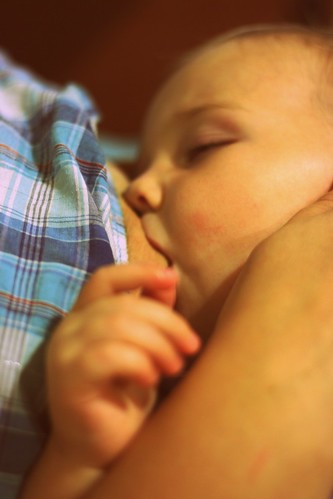
Breast is Best?

The WHO (World Health Organisation) guidelines state:
"Breastfeeding is an unequalled way of providing ideal food for the healthy growth and development of infants; it is also an integral part of the reproduction process with important implications for the health of mothers. As a global health recommendation, infants should be exclusively breastfed for the first six months of life to achieve optimal growth, development and health. Thereafter, to meet their evolving nutritional requirements, infants should receive nutritionally adequate and safe complementary foods while breastfeeding continues for up to 2 years or beyond. Exclusive breastfeeding from birth is possible except for a few medical conditions, and unrestricted exclusive breastfeeding results in ample milk production."

So there you have it - the official guidelines from those in the know....so why is there so much debate over breastfeeding? Why are people surprised to see babies older than 6 months breastfeeding? Obviously I am only talking about in the UK here, as I can't speak for anywhere else. I think the answers are quite simple really:
1) Breastfeeding can be hard work to get established. It can be painful and sore.
2) Breastfeeding is often hidden away as something private, particularly with older children. Therefore unless you know someone who breastfeeds, your experience with it may be very limited or even non-existent. 
3) It's an emotional topic and when breastfeeding doesn't work out for someone, it can affect how they feel about it. 

Apparently only 2% of women cannot physically breastfeed either due to medical conditions or for an unknown reason. A common misconception, particularly in the 1960's and 1970's, was an inability to feed due to a lack of milk. It is unlikely that this would truly have been the case for the majority of women who switched to formula milk. This was a time when women were advised to put their babies into 4 hourly routines and not feed them in the night time which is has since been evidenced as being detrimental to milk supply. However it is something that is still said today, and many mothers are still worrying about routines and length of time between feeds, and consequently questioning their ability to produce enough milk. There is also little known about growth spurts, so when the baby is suddenly feeding all day and all night to increase milk supply,  again mother's can question their milk production - sometimes leading to early weaning onto solids; but that's another debate! 

So anyway that's the guidelines and official figures - still doesn't tell you my opinion does it? 98% of women can breastfeed....does that mean that 98% should? No I don't believe it does. Nor do I believe that repeatedly telling people the health benefits is the way to increase the number of breastfeeding mothers. I believe that some antenatal class teachers, some of whom are midwives, are almost frightened to talk about the difficulties that women may have with breastfeeding, worried that it will stop women from even trying. Some midwives don't discuss breastfeeding at appointments for a variety of reasons, such as not having enough time, thinking it's too early to consider, that it will be covered by antenatal classes, that anything that is said won't be remembered anyway etc. 

Some women don't want to breastfeed. They don't want to try and it doesn't matter what anyone says to them, they simply don't want to do it. Is that wrong? Well it might be an alien feeling to my own, but it doesn't make it wrong. We are lucky to live in a country of choice, where formula can be made up safely with clean water and for some women the choice is clear, and they choose formula. 

A lack of support is probably the most common reason for women to stop breastfeeding - whether it is a lack of support from health professionals or family and friends. This can be combined with pain, or a lack of knowledge about how breastfed babies feed. I have alluded to routines and growth spurts already but this aggravated by comments such as "are you feeding that baby again?" or "why don't you give that baby a bottle?". There is no benefit to comments such as this and for a mother who has pain and is unsure what she is doing, it can't help. 

Some women try to breastfeed but stop because of pain and soreness. There can be a number of reasons that there is pain during breastfeeding, most of which can be corrected. If the baby is positioned incorrectly, then the nipple can become very sore, cracked, even bleeding. If the mother is given support and advice before too much damage is caused, then the mother can go on to breastfeed as long as she likes. Poor positioning can sometimes also lead to mastitis as the milk ducts aren't emptied properly but again with the correct support and advice this is easily remedied. Nipple thrush can be another cause of pain to the mother, but also to the baby. Once identified, both the mother and baby must be treated simultaneously or it will continue to be passed from one to the other. Thrush can be a nuisance to get rid of, and it can be a nuisance to get the correct treatment for, but with the correct support and advice, it is easily dealt with. Engorgement is also a common cause of pain for the mother, especially when the milk first comes in. The easiest way to deal with it is feeding the baby although it can make it harder to get the baby latched on, in which case, it can be easier to express a little milk off just to make the breast softer. There are other causes of pain of course, but these tend to be the most common so I have focused on these for now.


However before anyone thinks this is a pro-formula post, it isn't. For me, it is like choosing to buy powdered dried milk in the supermarket instead of the bottles of milk in the chiller. It is a perfectly good substitute but it's not what I would choose - give me fresh every time! Wouldn't you say that's what most people do? Isn't that how breastfeeding should be? The norm? In cultures where breastfeeding is the norm, problems with positioning are practically non-existent. Women are used to seeing breastfeeding, and learn from childhood how to position their babies. They automatically support each other, and after giving birth, the family rallies around so that the mother can get used to her baby and get feeding established, without worrying about visitors and the housework. 

I am proud that I have breastfed my children. Whilst the health benefits didn't matter to me before, they do now. I am glad that I have given them the best start in life but at the same time I am incredibly grateful that I had the right support in order for that to happen. I hope I don't come across as smug about it, but actually help to further the view that breastfeeding can be easy, pain free and enjoyable and that it might just be worth a go?

Saturday, 13 November 2010

Inspirational Midwives

I have heard it said that along the way in my training it is likely I will see some bad practice, some ways of practising that I won't want to use and hopefully a lot of good practise. So it got me to thinking about putting down in writing what it was about the two midwives that I know, that inspired me so much, so that when I am suffering from a lack of confidence I can look back and read it. Of course it will be hard to convey exactly why they are so inspiring in writing but I shall do my very best. Those that know me and are local to me will know exactly who I am talking about but obviously I need to keep this confidential so I shan't be mentioning their names - I shall call them Jo and Annie for the purpose of this post.

I first met Annie when my eldest daughter was about 5 days old. She visited me at home to perform her heel prick test and she unfortunately had to come back and repeat it when she was 9 days old as she just hadn't bled well enough. I opened the door to her and cried with relief at seeing her. Now I shall talk in more detail about breastfeeding later but on day 9, I was at the end of my tether with breastfeeding. I was sore, my nipples were cracked and bleeding, I was incredibly engorged and I had a baby that wanted to be constantly feeding. Annie helped me to get her latched properly, and encouraged me to attend the breastfeeding support group later on that day. So later on that day I managed, somehow, to get myself out the door and down to the group. I shan't bang on about the group now, as I will cover it in more detail when I talk about breastfeeding, but Annie ran this group so amazingly well. She'd manage to balance supporting women, without ever judging them or pressuring them. She knew when it would help for someone to have a peer supporter provide one on one support and when someone needed more. When Annie ran the group we had a thriving membership, sometimes there weren't enough chairs; yet when government funding was pulled back, it meant she was only able to drop in on the group when she could, and the running of the group fell to the peer supporters themselves. Whilst the peer supporters did a fantastic job, the membership dwindled considerably. It was down to Annie and that group that led me to breastfeed as long as I did, as well as myself of course.

I can't remember when exactly I first met Jo as she'd sometimes come along to the breastfeeding group, though that was more Annie's domain, or whether or not it was at the  Baby Massage class that she ran. Jo has a wealth of knowledge on many many subjects not just midwifery related and I believe she has recently completed her Masters.

Together Jo and Annie ran the antenatal group/drop in. They were much like the antenatal classes run by the hospitals in some ways but far far better. They would cover all the usual topics you'd expect at, such as pain relief, positions in labour, instrumental deliveries, episiotomies etc. However what made this group so fantastic is that there was no limit on how often you attended. When I fell pregnant with my second daughter, I attended early on following some bleeding I had and then more regularly from around 28 weeks. It meant that you got to know the others that attended, some would be further along than you, and some would be earlier in pregnancy. When I attended the hospital classes when I was pregnant with my first daughter, we had one of those awkward get to know each other games and everyone was uncomfortable. At drop-in, as I shall call it, we did always introduce ourselves and although it was always a little bit uncomfortable, it got it over and done with, not to mention once you'd been a few times you found it easy. It also gave you a chance to say what had been going on with you that week, to raise something that might be worrying you, to moan about work or relatives. And it always felt like someone else had been through the same or was currently experiencing the same and that made for a very reassuring environment. So Annie and Jo provided this opportunity to access the information we needed, time to speak to a midwife but also time to speak with our peers. Separately they are both brilliant but together they are the best!

When I fell pregnant with my second daughter it was only natural to me to book with Annie. I saw her every week at the breastfeeding group and I felt so comfortable with her. Throughout my pregnancy I saw either Annie or Jo and got to know them both so much more. They gave me the confidence and the information to choose a home water birth. It was the ultimate joy when it was Annie and Jo that were present for the birth of my 2nd born. My first daughter was delivered by the midwives, my second daughter was delivered by me. Annie and Jo helped that to happen and in the case of a normal birth, this is how it should happen. The best part of this is, it's not only me they have this effect on. Amongst my friends, I can see how many they have empowered in their births....whether they were home births, Cesarean sections, instrumental deliveries or inductions....Annie and Jo inspired them all.

If I can be half as good a midwife as either of them, I shall be proud. I feel honoured to have known them, and words can't describe how I lucky I feel to have had them at the birth of my second daughter.

Wednesday, 27 October 2010

Attitude and Stereotypes

Today we had a lecture about attitude and stereotypes and it really made me think about myself and the kind of person I am. I tend to think I don't conform to the norm and like to be a bit different. However as a female who is more than "cuddly" I certainly think I conform to the traditional image of a midwife. When my eldest daughter was born, I did tend to dress her in pink clothing; though it has to be said, I partially did that so that people would know she was a girl and this continued as she hadn't much hair until she was 2 years old.

In personality I think I am fairly atypical of female traits. I am sensitive, cry easily and wear my heart on my sleeve. I have a tendency to react first and think later - this can be both a benefit and a fault of course. In general I think I have a "good attitude". I mostly look on the positive side of life and am an optimist. However at other times I have a definite tendency towards a negative, pessimistic attitude. My self-confidence is not great and people don't always know this about me as I put on a face to hide it so I would say that is the more negative side of my personality. However when it comes to situations and life in general I am fairly optimistic. I also tend to try and turn situations around and find the positives in them where I can. I also like to think that I always try to see the best in everyone. This is probably because I don't believe that anyone is all bad and that circumstance, upbringing, finances etc. all contribute to who we are; not to forget that everyone is entitled to a bad day.

When I consider my home life I think I am a little less stereotypical. I have a house husband for example - that's definitely not stereotypical. My husband is responsible for the majority of the childcare, the cooking, the washing, and  the housework. My husband is not the type of man to be concerned with how people view him though.  I had however been a stay at home Mum for 4 years before I started the course. I don't think that is unusual, although it's not unusual for women to return to work either. Perhaps slightly more unusual is the fact that I used cloth nappies and a sling which which to carry them. Whilst these are growing in popularity, they are still the more unusual option.

When I was at school Take That were around for the first time and many of my friends were really into them. Me - nope I didn't like them at all! I was into Guns n' Roses and Pink Floyd. I liked to wear Doctor Martens and a leather jacket. So although I wasn't the stereotypical teenager in some ways, I was still conforming to an image of what a Guns n' Roses fan should look like. Not quite so much of an individual after all. These days I listen to what I like and if it's in the charts then great because they'll be playing it on the radio.

So what benefit is this to me in my training as a midwife? I don't fit into a "box". I am not stereotypical because no-one really is. Everyone is unique and an individual and as such the care provided to them needs to be tailored individually as well. As a midwife being able to see the good in everyone should only advantage me I think? Understanding that attitude can be affected by others is essential as well. If I am positive with a woman, in both my language and demeanour, then that can transfer to her and help her to be more positive too. It's important not to be judgemental as a midwife but we all make snap judgements on a daily basis. We make assumptions about what people are like based on their clothes, their appearance, their job. This shouldn't impact on how I look after women. I am most definitely not a saint or an angel, as midwives are sometimes portrayed,  but I do try my best to treat people equally already.