I have heard it said that along the way in my training it is likely I will see some bad practice, some ways of practising that I won't want to use and hopefully a lot of good practise. So it got me to thinking about putting down in writing what it was about the two midwives that I know, that inspired me so much, so that when I am suffering from a lack of confidence I can look back and read it. Of course it will be hard to convey exactly why they are so inspiring in writing but I shall do my very best. Those that know me and are local to me will know exactly who I am talking about but obviously I need to keep this confidential so I shan't be mentioning their names - I shall call them Jo and Annie for the purpose of this post.
I first met Annie when my eldest daughter was about 5 days old. She visited me at home to perform her heel prick test and she unfortunately had to come back and repeat it when she was 9 days old as she just hadn't bled well enough. I opened the door to her and cried with relief at seeing her. Now I shall talk in more detail about breastfeeding later but on day 9, I was at the end of my tether with breastfeeding. I was sore, my nipples were cracked and bleeding, I was incredibly engorged and I had a baby that wanted to be constantly feeding. Annie helped me to get her latched properly, and encouraged me to attend the breastfeeding support group later on that day. So later on that day I managed, somehow, to get myself out the door and down to the group. I shan't bang on about the group now, as I will cover it in more detail when I talk about breastfeeding, but Annie ran this group so amazingly well. She'd manage to balance supporting women, without ever judging them or pressuring them. She knew when it would help for someone to have a peer supporter provide one on one support and when someone needed more. When Annie ran the group we had a thriving membership, sometimes there weren't enough chairs; yet when government funding was pulled back, it meant she was only able to drop in on the group when she could, and the running of the group fell to the peer supporters themselves. Whilst the peer supporters did a fantastic job, the membership dwindled considerably. It was down to Annie and that group that led me to breastfeed as long as I did, as well as myself of course.
I can't remember when exactly I first met Jo as she'd sometimes come along to the breastfeeding group, though that was more Annie's domain, or whether or not it was at the Baby Massage class that she ran. Jo has a wealth of knowledge on many many subjects not just midwifery related and I believe she has recently completed her Masters.
Together Jo and Annie ran the antenatal group/drop in. They were much like the antenatal classes run by the hospitals in some ways but far far better. They would cover all the usual topics you'd expect at, such as pain relief, positions in labour, instrumental deliveries, episiotomies etc. However what made this group so fantastic is that there was no limit on how often you attended. When I fell pregnant with my second daughter, I attended early on following some bleeding I had and then more regularly from around 28 weeks. It meant that you got to know the others that attended, some would be further along than you, and some would be earlier in pregnancy. When I attended the hospital classes when I was pregnant with my first daughter, we had one of those awkward get to know each other games and everyone was uncomfortable. At drop-in, as I shall call it, we did always introduce ourselves and although it was always a little bit uncomfortable, it got it over and done with, not to mention once you'd been a few times you found it easy. It also gave you a chance to say what had been going on with you that week, to raise something that might be worrying you, to moan about work or relatives. And it always felt like someone else had been through the same or was currently experiencing the same and that made for a very reassuring environment. So Annie and Jo provided this opportunity to access the information we needed, time to speak to a midwife but also time to speak with our peers. Separately they are both brilliant but together they are the best!
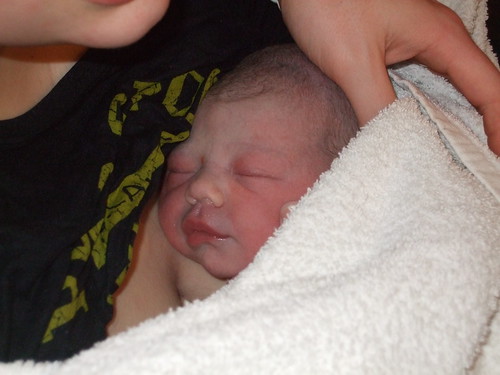
When I fell pregnant with my second daughter it was only natural to me to book with Annie. I saw her every week at the breastfeeding group and I felt so comfortable with her. Throughout my pregnancy I saw either Annie or Jo and got to know them both so much more. They gave me the confidence and the information to choose a home water birth. It was the ultimate joy when it was Annie and Jo that were present for the birth of my 2nd born. My first daughter was delivered by the midwives, my second daughter was delivered by me. Annie and Jo helped that to happen and in the case of a normal birth, this is how it should happen. The best part of this is, it's not only me they have this effect on. Amongst my friends, I can see how many they have empowered in their births....whether they were home births, Cesarean sections, instrumental deliveries or inductions....Annie and Jo inspired them all.
If I can be half as good a midwife as either of them, I shall be proud. I feel honoured to have known them, and words can't describe how I lucky I feel to have had them at the birth of my second daughter.
A blog following my three years of study as a student midwife. Looking at my time spent in University and also my time on placement. The highs and lows of it all.
Showing posts with label values. Show all posts
Saturday, 13 November 2010
Tuesday, 9 November 2010
Assessment, Assignments and Exams
I have now had half of my results for the year, thankfully all passed, and it's got me thinking about the different ways in which we are tested. Before even getting into University we all had to pass a Maths and English test and it has felt a bit like we've been constantly tested since then. So I thought I'd tell you all a bit more about the tests that we've had to do and how I have "survived" them.
Academic Skills - 2000 word assignment.
I enjoyed this assignment in some ways and in other ways it frustrated me. The assignment was, depending on our prior experience, teaching/reminding us how to write an essay and how to source references. We also had sessions on how to do Harvard Referencing and four activities designed to help us so that by the time we came to actually write our assignment we'd done most of the work already. For the assignment itself we had to summarise our chosen article and then write about how we it links to our future role. Finally we had to talk about the academic skills we had learnt in the process. I enjoyed it from the perspective that I actually enjoy writing essays and I enjoy doing further reading. I felt frustrated because I was limited by it in so many ways. I would have enjoyed exploring the focal point of my article some more but it wasn't what the assignment was for. That said I am thoroughly enjoying researching my psycho-social assignment which is my next one due in.
Practice Assessment Document (PAD)
I have made reference to this book before. This is the book we carry everywhere with us on placement. For each placement that we do we have key areas that we have to achieve e.g. supporting women to breastfeed in challenging circumstances, recognise the onset of labour, be the initial port of contact for pregnant women, competently provide information regarding screening etc... You'll have to excuse me a little here as my book is currently with my personal tutor so I have had to rely on my memory and I couldn't recall exactly how they were written. When I first got my book and I looked through everything that we had to get signed off, it felt so overwhelming. Once on placement it almost felt even more overwhelming. The opportunity to get anything looked at let alone signed off, felt very remote. However I soon learnt you had to find the right balance of forceful, respectful and keen. However it is important to note that the balance can be different for everyone that you work with. I certainly found it far easier to get my book signed once I was into the Community part of my placement. Anyway for each section of our PAD we have to have at least one formative assessment before the summative assessment is done and a mark awarded. The mark given definitely depends on who you are working with, not just your ability and it seems that our mentors were every bit as confused as us; however in their defence it is a fairly new way of doing it so they are still learning too.
Exam - Biological Basis of Health.
A 2 hour exam consisting of 25 multiple choice questions, a midwifery specific diagram and 4 midwifery specific short answer questions. Now I am the first to admit that Biology is not my strong point. When I was at school and was choosing my options (is that showing my age or do they still call it that?) I could choose whatever I wanted. I wanted to do a science but knew it wasn't my strong point so I went to my teachers in turn to ask their advice. They each advised me not to take their subject......and this was a grammar school. looking back I think that says more about the teachers than it does me but hey that was then and this is now. So having said that I do sometimes wonder whether I was really that bad or more that I wasn't good enough. Either way it has left me with this feeling that I am no good at science. Having said that I think I have a good enough understanding of where things are in my body, and how the reproductive system works, and there are certain parts of our lectures I have found easier than others. Anyway to cut a long story short, I studied hard for my exam. Of all my assessments, exams are what I dread the most.
Other students have often asked how I revise and I can only tell you what I do and say that it works for me. During lectures I take extensive notes even if they tell me it's going to be put up on our portal system. Following the lectures, I head to the library and type up my notes (not always immediately before anyone thinks I am a complete geek, I actually tend to do big chunks at a time) and when I reach a part that I've written that I don't understand I can reach for a book and read up some more so that I do understand it. I may include flow charts so that I can see that x leads to y and so on and so forth. I won't say it leads to me remembering it all but it does help and it does mean I understand it better.
Drugs Calculation Test
We had two weeks in which we had to log in and answer 20 drugs calculation questions. We were allowed to use a calculator and perform the test wherever we liked, although they did request that we did it on our own. In the two weeks preceding we could access practice tests so that we could get used to the format and the kinds of questions we'd be asked. We did have to get 100% to pass but in all honesty, would you want me to be correct with drugs calculations anything less than 100%? I wasn't nervous about the test; I hadn't had any problems with the practice questions after all. I guess the only thing I was worried about was making a silly mistake or misreading the question. It would be too difficult to misread mg as mcg or similar. Thankfully I passed first time but I was surprised by how nervous I was when I was doing it.
So what's left for this year? My next task is my Psycho-Social assignment, then my Values assignment and then my PAD for my second placement this year. Oh and I almost forgot, we have a poster presentation as part of our Psycho-Social this Friday; although it's not graded.
My advice to current students and future students is plan early! For us, we were given all our assignment details early, so I started to think about them early. I have had to plan my study time around my children and family commitments. When we had only one lecture in a day, I didn't go home, I went to the library. This gave me time to rewrite parts I wasn't happy with. It also gave me time to look through the assessment criteria and see if I had covered all I needed to. With my revision notes for the Biology exam, starting early meant I was re-covering things rather than learning things for the first time.
Academic Skills - 2000 word assignment.
I enjoyed this assignment in some ways and in other ways it frustrated me. The assignment was, depending on our prior experience, teaching/reminding us how to write an essay and how to source references. We also had sessions on how to do Harvard Referencing and four activities designed to help us so that by the time we came to actually write our assignment we'd done most of the work already. For the assignment itself we had to summarise our chosen article and then write about how we it links to our future role. Finally we had to talk about the academic skills we had learnt in the process. I enjoyed it from the perspective that I actually enjoy writing essays and I enjoy doing further reading. I felt frustrated because I was limited by it in so many ways. I would have enjoyed exploring the focal point of my article some more but it wasn't what the assignment was for. That said I am thoroughly enjoying researching my psycho-social assignment which is my next one due in.
Practice Assessment Document (PAD)
I have made reference to this book before. This is the book we carry everywhere with us on placement. For each placement that we do we have key areas that we have to achieve e.g. supporting women to breastfeed in challenging circumstances, recognise the onset of labour, be the initial port of contact for pregnant women, competently provide information regarding screening etc... You'll have to excuse me a little here as my book is currently with my personal tutor so I have had to rely on my memory and I couldn't recall exactly how they were written. When I first got my book and I looked through everything that we had to get signed off, it felt so overwhelming. Once on placement it almost felt even more overwhelming. The opportunity to get anything looked at let alone signed off, felt very remote. However I soon learnt you had to find the right balance of forceful, respectful and keen. However it is important to note that the balance can be different for everyone that you work with. I certainly found it far easier to get my book signed once I was into the Community part of my placement. Anyway for each section of our PAD we have to have at least one formative assessment before the summative assessment is done and a mark awarded. The mark given definitely depends on who you are working with, not just your ability and it seems that our mentors were every bit as confused as us; however in their defence it is a fairly new way of doing it so they are still learning too.
Exam - Biological Basis of Health.
A 2 hour exam consisting of 25 multiple choice questions, a midwifery specific diagram and 4 midwifery specific short answer questions. Now I am the first to admit that Biology is not my strong point. When I was at school and was choosing my options (is that showing my age or do they still call it that?) I could choose whatever I wanted. I wanted to do a science but knew it wasn't my strong point so I went to my teachers in turn to ask their advice. They each advised me not to take their subject......and this was a grammar school. looking back I think that says more about the teachers than it does me but hey that was then and this is now. So having said that I do sometimes wonder whether I was really that bad or more that I wasn't good enough. Either way it has left me with this feeling that I am no good at science. Having said that I think I have a good enough understanding of where things are in my body, and how the reproductive system works, and there are certain parts of our lectures I have found easier than others. Anyway to cut a long story short, I studied hard for my exam. Of all my assessments, exams are what I dread the most.
Other students have often asked how I revise and I can only tell you what I do and say that it works for me. During lectures I take extensive notes even if they tell me it's going to be put up on our portal system. Following the lectures, I head to the library and type up my notes (not always immediately before anyone thinks I am a complete geek, I actually tend to do big chunks at a time) and when I reach a part that I've written that I don't understand I can reach for a book and read up some more so that I do understand it. I may include flow charts so that I can see that x leads to y and so on and so forth. I won't say it leads to me remembering it all but it does help and it does mean I understand it better.
Drugs Calculation Test
We had two weeks in which we had to log in and answer 20 drugs calculation questions. We were allowed to use a calculator and perform the test wherever we liked, although they did request that we did it on our own. In the two weeks preceding we could access practice tests so that we could get used to the format and the kinds of questions we'd be asked. We did have to get 100% to pass but in all honesty, would you want me to be correct with drugs calculations anything less than 100%? I wasn't nervous about the test; I hadn't had any problems with the practice questions after all. I guess the only thing I was worried about was making a silly mistake or misreading the question. It would be too difficult to misread mg as mcg or similar. Thankfully I passed first time but I was surprised by how nervous I was when I was doing it.
So what's left for this year? My next task is my Psycho-Social assignment, then my Values assignment and then my PAD for my second placement this year. Oh and I almost forgot, we have a poster presentation as part of our Psycho-Social this Friday; although it's not graded.
My advice to current students and future students is plan early! For us, we were given all our assignment details early, so I started to think about them early. I have had to plan my study time around my children and family commitments. When we had only one lecture in a day, I didn't go home, I went to the library. This gave me time to rewrite parts I wasn't happy with. It also gave me time to look through the assessment criteria and see if I had covered all I needed to. With my revision notes for the Biology exam, starting early meant I was re-covering things rather than learning things for the first time.
Labels:
assessment,
assignment,
biology,
community midwife,
drugs calculation,
exam,
maths,
midwifery,
placement,
psycho-social,
student,
test,
values
Subscribe to:
Posts (Atom)
