Last week I was given the classification for my degree and I am very proud to tell you that I achieved a 2:1. We're now into the final pieces of paperwork and sometime next month (hopefully) I'll get my pin and be a fully qualified midwife. This month I shall attend an interview for a job and I know I've got my fingers and toes crossed that I'll get it.
It's an odd feeling right now. I'm exhilarated and slightly scared. I am scared of no longer having that mentor looking over me and ensuring that I'm doing things correctly. Yet at the same time I am looking forward to working independently, taking all that I have learnt from my various mentors over the past three years and developing my own practice.
I am proud to be able to say that I've made it. I have managed the demands of academic life, placement and family life. Once a long time ago, I began a journey to be a teacher and over half way through the course, I failed a major assignment and dropped out. At that point I thought I had given up the chance of ever getting a degree. I had no idea what I'd do with my life and didn't really think I'd ever make anything of myself. However I feel that I have also never really given up. I have always forged forward with the belief that there is something better out there for me; that I could do more.
I am not the greatest student, I wouldn't consider myself particularly academic. When I was doing my teaching course, I averaged very low marks, scraping through each assignment. My assignments as a student midwife, have been varied....some I've got it right and others I've not done so well at. I have taken something from each experience. I have literally taken it one day at a time, one challenge at a time...never daring to think beyond being a student and simply doing my best. I also could not have done it without the amazing support of my husband who always believed in me and my family's never ending support.
At the moment I am making the most of a little time off.....spending time with my children, seeing friends that I've woefully neglected over the past three years, spending time with family, catching up on my knitting and spending time preparing for Twirling Nationals with my daughters' twirling group (if you are interested you can follow them here http://distinctiontwirlersofmedway.blogspot.co.uk/2013/04/happy-easter.html ).
It's been a long journey and in so many ways, this is just the first step on the next part of the trip. I shall aim to continue to tell you all what it is like to be a newly qualified midwife. I am looking forward to taking that step but for now I shall enjoy spending time being me.
Showing posts with label student midwife. Show all posts
Showing posts with label student midwife. Show all posts
Tuesday, 2 April 2013


Tuesday, 23 October 2012
Thinking towards the future
Yesterday the group ahead of ours graduated. Wow! Well done to all of them. However it does bring it home, that soon it will be us. Our lecturers are beginning to talk about job applications and portfolios and other paperwork that will need to be completed before we can qualify. In just a few weeks we will begin our final placement and we'll be aiming to get as much experience as we can whilst we are still students. I know I definitely feel like I still have so much to learn, and that there is no way I have enough time to learn it all. However I do feel that it is a bit like driving and passing your test. At first you know enough to pass...you've got the basics but you need experience to become more confident. You certainly can't know what you've never faced. I don't worry about it because I think it's far more dangerous to think you know it all. We are life long learners and it's important to remember that.
At times I still feel completely overwhelmed. If I think about my dissertation and assignment still to be written, my portfolio to complete, my genetics workbook to complete and everything else, I feel slightly ill. Therefore I try really hard to concentrate on one thing at a time. And that's just the academic side of things. This placement we also have to get all of our required deliveries and ensure we've got all our hours. I only need three more deliveries thankfully but I know that there are some of my cohort that need far more and they'll be pushing hard to get them now, so that they can qualify together with the rest of us.
In between studying and researching for my dissertation, I am spending quite a lot of time with my daughters Twirling group http://distinctiontwirlersofmedway.blogspot.co.uk/. I do think it is vital to have some time out from being a student midwife and for me, spending time with my family is essential. My eldest daughter has been twirling for just over a year now and my youngest joined her just a few months ago. Over the time they have been going, I have made some fantastic new friends and they too offer me support as a student. My eldest daughter used to be quite shy but her confidence has increased tenfold, through this hobby. This weekend, they both attended a competition and were both were fortunate enough to come home with trophies. A year ago I would never have thought it could be possible.
Recently I also helped at an open evening at my University. I really enjoyed seeing the potential students and their enthusiasm for midwifery. It reminded me of when I first started my journey to become a midwife and how excited I was. I am still excited about becoming a midwife and I look forward to my career and supporting women at such an important time of their lives. So when the amount of work to be done is getting me down, and overwhelmed, I just remind myself of why I set out on this journey and I battle on another day!
At times I still feel completely overwhelmed. If I think about my dissertation and assignment still to be written, my portfolio to complete, my genetics workbook to complete and everything else, I feel slightly ill. Therefore I try really hard to concentrate on one thing at a time. And that's just the academic side of things. This placement we also have to get all of our required deliveries and ensure we've got all our hours. I only need three more deliveries thankfully but I know that there are some of my cohort that need far more and they'll be pushing hard to get them now, so that they can qualify together with the rest of us.
In between studying and researching for my dissertation, I am spending quite a lot of time with my daughters Twirling group http://distinctiontwirlersofmedway.blogspot.co.uk/. I do think it is vital to have some time out from being a student midwife and for me, spending time with my family is essential. My eldest daughter has been twirling for just over a year now and my youngest joined her just a few months ago. Over the time they have been going, I have made some fantastic new friends and they too offer me support as a student. My eldest daughter used to be quite shy but her confidence has increased tenfold, through this hobby. This weekend, they both attended a competition and were both were fortunate enough to come home with trophies. A year ago I would never have thought it could be possible.
Recently I also helped at an open evening at my University. I really enjoyed seeing the potential students and their enthusiasm for midwifery. It reminded me of when I first started my journey to become a midwife and how excited I was. I am still excited about becoming a midwife and I look forward to my career and supporting women at such an important time of their lives. So when the amount of work to be done is getting me down, and overwhelmed, I just remind myself of why I set out on this journey and I battle on another day!
Monday, 2 January 2012
Working in the community
Before Christmas I was working in Community which I do love. I particularly like it when I see women before and after the birth of their baby, or to see women on their first day home and then to see them when they are being discharged. In both situations, I have witnessed many changes in the women. I have witnessed the nervous woman become a confident mother, and I have witnessed the confident professional become very unsure and lost when faced with a tiny helpless baby. Babies are certainly unpredictable and it doesn't matter how many books you read before they are born, you simply can't be fully prepared.
One of the most common questions to be asked as a Midwife is "is this normal?" - this might be during pregnancy or after the birth but it gets asked a lot. 99% of the time (a guess, I haven't sat and worked out a statistic) I would say yes, that it is perfectly normal. Babies are born with their own personalities and all we can do is respond to their needs to the best of our abilities. In the early days this often means trying to guess at what they need...mentally going through the checklist - hungry? nappy needs changing? too hot or too cold? tired? It's all guess work really until you can begin to learn your baby's cues.

Frequently new mothers ask about how to get their baby to sleep in the moses basket/crib/cot...anywhere rather than lying on Mum. Don't worry I did the same myself, in fact I think I spent the first 2 years of my eldest's life wondering and worrying about how to get her to sleep anywhere but near or on me - she had to be in contact in some way, whether lying on me or just having a hand on me. Generally I advise new mothers to cuddle their babies...shocking I know...but the baby has spent 9 months inside Mum, able to hear her heart beating as a constant sound, and never before having experienced hunger, temperature, gravity and yet we expect babies to suddenly sleep by themselves. Birth is a shock to them and they need reassurance and comfort. I also advise trying putting something that smells of Mum in the crib, warming the crib with a hot water bottle (ensuring to remove it before baby goes in) so it's not suddenly cold on their back, giving baby to Dad to settle for sleep, a slumber bear if they can afford one but what works for one baby won't work for another, and sometimes what works one night won't work the next, and sometimes it feels that nothing works at all. It can simply be a case of give it time...it certainly was the case with my eldest daughter. My younger daughter was far easier - she'd sleep anywhere! I certainly don't believe it was anything I did that made her more likely to sleep, just that she was born with that kind of personality. So give it time, cuddle your baby, try these things by all means but I promise that at some point, your baby will be able to go to sleep by themselves. I have been on the receiving end of such advice and at the time it felt like useless advice, the tiredness was relentless, and that even one more night was one night too many but I hope it brings comfort to know that yes this is normal for many babies.
I seem to have wandered into the realms of sleepless nights and generic advice but it is something that new mums ask about so often that I feel it's worth discussion. Certainly I feel that the lack of sleep I endured when my children were younger has prepared me well for night shifts as a midwife. As a breastfeeding mother helper, helping to run the group, the women that came along would frequently ask for help with sleep and their babies. We live in a society where "sleeping through the night" appears to be main focus, the ultimate goal, particularly in the early days and then with some desperation as time goes by. However if were simply to accept that babies wake in the night for an indefinite period of time, is it not easier to cope with? That actually the norm is not for babies to sleep through the night, but for them to wake regularly to feed and that at times they will sleep for longer and other times they will wake more frequently, such as during growth spurts which again are normal. I know that I found it far easier to deal with my second child's nightly wakings because I was prepared for it. I was still exhausted at times, and I still complained about it but I didn't waste energy trying to fight it or find an answer to it. I tried things to see if it helped but I didn't worry if it didn't, I just recognised that she wasn't ready yet. However I did have the advantage of not working at that time, I wasn't yet a student either. My eldest spent mornings at nursery so I used that time to catch up a bit and rest. I think we have a tendancy in this country to try and push ourselves back to normal as soon as possible and actually we'd do well to stop and learn about our babies, spend time with them, allow time to recover from the birth properly...focus on what's important...not on having a show home, or getting out and about as quickly as possible, make use of friends and family to help out if you can. This is of course all very idealistic and I do realise that but I can dream, at least when I'm allowed to sleep that is. At the very least I think this is useful advice for those very early days....stop, rest, recover and cuddle your baby.

One of the most common questions to be asked as a Midwife is "is this normal?" - this might be during pregnancy or after the birth but it gets asked a lot. 99% of the time (a guess, I haven't sat and worked out a statistic) I would say yes, that it is perfectly normal. Babies are born with their own personalities and all we can do is respond to their needs to the best of our abilities. In the early days this often means trying to guess at what they need...mentally going through the checklist - hungry? nappy needs changing? too hot or too cold? tired? It's all guess work really until you can begin to learn your baby's cues.
Frequently new mothers ask about how to get their baby to sleep in the moses basket/crib/cot...anywhere rather than lying on Mum. Don't worry I did the same myself, in fact I think I spent the first 2 years of my eldest's life wondering and worrying about how to get her to sleep anywhere but near or on me - she had to be in contact in some way, whether lying on me or just having a hand on me. Generally I advise new mothers to cuddle their babies...shocking I know...but the baby has spent 9 months inside Mum, able to hear her heart beating as a constant sound, and never before having experienced hunger, temperature, gravity and yet we expect babies to suddenly sleep by themselves. Birth is a shock to them and they need reassurance and comfort. I also advise trying putting something that smells of Mum in the crib, warming the crib with a hot water bottle (ensuring to remove it before baby goes in) so it's not suddenly cold on their back, giving baby to Dad to settle for sleep, a slumber bear if they can afford one but what works for one baby won't work for another, and sometimes what works one night won't work the next, and sometimes it feels that nothing works at all. It can simply be a case of give it time...it certainly was the case with my eldest daughter. My younger daughter was far easier - she'd sleep anywhere! I certainly don't believe it was anything I did that made her more likely to sleep, just that she was born with that kind of personality. So give it time, cuddle your baby, try these things by all means but I promise that at some point, your baby will be able to go to sleep by themselves. I have been on the receiving end of such advice and at the time it felt like useless advice, the tiredness was relentless, and that even one more night was one night too many but I hope it brings comfort to know that yes this is normal for many babies.
I seem to have wandered into the realms of sleepless nights and generic advice but it is something that new mums ask about so often that I feel it's worth discussion. Certainly I feel that the lack of sleep I endured when my children were younger has prepared me well for night shifts as a midwife. As a breastfeeding mother helper, helping to run the group, the women that came along would frequently ask for help with sleep and their babies. We live in a society where "sleeping through the night" appears to be main focus, the ultimate goal, particularly in the early days and then with some desperation as time goes by. However if were simply to accept that babies wake in the night for an indefinite period of time, is it not easier to cope with? That actually the norm is not for babies to sleep through the night, but for them to wake regularly to feed and that at times they will sleep for longer and other times they will wake more frequently, such as during growth spurts which again are normal. I know that I found it far easier to deal with my second child's nightly wakings because I was prepared for it. I was still exhausted at times, and I still complained about it but I didn't waste energy trying to fight it or find an answer to it. I tried things to see if it helped but I didn't worry if it didn't, I just recognised that she wasn't ready yet. However I did have the advantage of not working at that time, I wasn't yet a student either. My eldest spent mornings at nursery so I used that time to catch up a bit and rest. I think we have a tendancy in this country to try and push ourselves back to normal as soon as possible and actually we'd do well to stop and learn about our babies, spend time with them, allow time to recover from the birth properly...focus on what's important...not on having a show home, or getting out and about as quickly as possible, make use of friends and family to help out if you can. This is of course all very idealistic and I do realise that but I can dream, at least when I'm allowed to sleep that is. At the very least I think this is useful advice for those very early days....stop, rest, recover and cuddle your baby.
Photos courtesy of Marie Donn Photography
Friday, 18 November 2011
Passion and Inspiration
Sometimes I find myself bogged down in the workload. For example, at the moment we are working on two assignments, about to return to placement and in January we have a presentation and a biology exam. In the midst of this, I am also attending meetings in my capacity as set rep and trying to plan for Christmas, spend time with my family and friends and there just isn't enough hours in the week. Consequently I'm a little rundown at the moment, with cold after cold and a constant feeling of tiredness. So it's easy to wonder how I maintain my passion for midwifery, and to keep that light at the end of the tunnel to aim for.
I try to maintain my passion for midwifery through reading - I'm always interested in the use of techniques I've never seen in practice and that we're unlikely to be taught. For example, the use of water blisters to help with the pain in a back to back labour. If you've not heard of them before then have a read, it's really interesting. Something else I was reading about recently was a technique for dealing with shoulder dystocia where the mother is aided into a running start position which is explained here.
I also recently attended a water birth study day which re-ignited my passion for water birth and home birth. Prior to beginning the course, it was of course my own home water birth that inspired me to become a midwife and yet I am still to attend one myself. The study day reminded me of how to trust in women to be able to birth their babies without any intervention. It also highlighted to me the amount of fear there is surrounding home birth - from the health professionals as well as the women. Fortunately this isn't true of everyone but clearly a significant enough number for the percentage of women having a home birth to be extremely low. According to Birth Choice UK, just 2.39% of births in the UK were home births and in the area where I work just 2.2%, a figure which hasn't changed much in the past 10 years.
This week I was fortunate to be able to attend the RCM student midwives conference in Brighton. As well as the superb amount of freebies from all the stands that were there, I also had the opportunity to listen to some inspirational speakers. I was able to hear from other students, newly qualified midwives and midwives who had been working in the profession for a long time. If you ever get the chance to attend then I thoroughly recommend it. It's hard for me to sum up exactly how much you can gain from the experience. I'd also recommend any other conferences you can attend, such as the ARM conference or any other event where you might have the opportunity to hear such inspirational speakers.
So when I'm feeling the pressure of my workload and all I'm really doing is worrying about how I am going to get it all done, to the best of my ability, sometimes I just take some time out to remind myself why I am doing it and I then find I can focus better on my work. Alternatively I also have times when I just have to push on, push past the point where I feel everything I am writing is rubbish, to the point where it begins to make sense. Trust me, it does happen sometimes.
If you haven't done so already, can you please sign the petition for more midwives!
http://www.rcm.org.uk/college/campaigns-events/protect-maternity-services/

I try to maintain my passion for midwifery through reading - I'm always interested in the use of techniques I've never seen in practice and that we're unlikely to be taught. For example, the use of water blisters to help with the pain in a back to back labour. If you've not heard of them before then have a read, it's really interesting. Something else I was reading about recently was a technique for dealing with shoulder dystocia where the mother is aided into a running start position which is explained here.
I also recently attended a water birth study day which re-ignited my passion for water birth and home birth. Prior to beginning the course, it was of course my own home water birth that inspired me to become a midwife and yet I am still to attend one myself. The study day reminded me of how to trust in women to be able to birth their babies without any intervention. It also highlighted to me the amount of fear there is surrounding home birth - from the health professionals as well as the women. Fortunately this isn't true of everyone but clearly a significant enough number for the percentage of women having a home birth to be extremely low. According to Birth Choice UK, just 2.39% of births in the UK were home births and in the area where I work just 2.2%, a figure which hasn't changed much in the past 10 years.
This week I was fortunate to be able to attend the RCM student midwives conference in Brighton. As well as the superb amount of freebies from all the stands that were there, I also had the opportunity to listen to some inspirational speakers. I was able to hear from other students, newly qualified midwives and midwives who had been working in the profession for a long time. If you ever get the chance to attend then I thoroughly recommend it. It's hard for me to sum up exactly how much you can gain from the experience. I'd also recommend any other conferences you can attend, such as the ARM conference or any other event where you might have the opportunity to hear such inspirational speakers.
So when I'm feeling the pressure of my workload and all I'm really doing is worrying about how I am going to get it all done, to the best of my ability, sometimes I just take some time out to remind myself why I am doing it and I then find I can focus better on my work. Alternatively I also have times when I just have to push on, push past the point where I feel everything I am writing is rubbish, to the point where it begins to make sense. Trust me, it does happen sometimes.
If you haven't done so already, can you please sign the petition for more midwives!
http://www.rcm.org.uk/college/campaigns-events/protect-maternity-services/
Tuesday, 4 October 2011
Another placement finished
Two more assignments submitted and suddenly I'm halfway through the course. Everyone told me that the time would fly past and they were right, it really has flown. I'm looking back at all I've done and learnt and feeling quite proud of myself and yet I can still look at all there is to learn and feel overwhelmed by it all. Over the past 18 months I have seen a variety of women with very different needs,and a variety of different midwives with different ways of working. I've seen normal births and I've seen births that needed high levels of expertise in order for mother and baby to survive - all of which I have learnt from. Sometimes it can feel like what we do at Uni, is a distant cry from what we do on placement. After all our first 18 months of training has been focused on normality but of course what we see on placement can be very different. One thing I have learnt is that remaining focused on what is normal, helps to identify when something isn't within the realms of normality.
A simple example of this is when we first palpate the uterus to see what position the baby is in, in a woman who is 40 weeks pregnant. Focusing on normality, we would expect the baby to be in a head down position so if the baby is not in that position, we can identify this and then act appropriately. At the beginning of my training I didn't really have a clue what position the baby was in but with practice I soon began to be able to tell. I even managed to identify a baby in the breech position. As I've continued in my training, I've become more and more confident and even at an earlier stage of pregnancy, can often identify the position. That said, I am not afraid to say when I'm not sure and to ask the midwife I am working with to have a feel and see what she thinks. It's essential to be comfortable enough to say "I don't know". There is no shame in not knowing something, there is shame in pretending that you do.
It's not unknown for a doctor to request a second opinion and I've witnessed qualified midwives ask for another midwife's opinion. Yet I know it can be difficult to say 'I don't know'. I'd say it's probably more difficult at the beginning of your training because you don't know yet whether or not you should know the answer and whether you'll look foolish if you don't know. I still maintain that you look far more foolish if you pretend to know the answer....you will get caught out. These days when I come across a term I don't know - usually when booking someone, they mention a medical condition I've never heard of - I'll ask the midwife I'm working with, or I'll look it up. We can't know everything after all.
So if you are about to start your first placement then there is your first bit of advice - don't be afraid to say you don't know something. BUT don't wait for someone else to find out for you - look it up - google is your friend!
A simple example of this is when we first palpate the uterus to see what position the baby is in, in a woman who is 40 weeks pregnant. Focusing on normality, we would expect the baby to be in a head down position so if the baby is not in that position, we can identify this and then act appropriately. At the beginning of my training I didn't really have a clue what position the baby was in but with practice I soon began to be able to tell. I even managed to identify a baby in the breech position. As I've continued in my training, I've become more and more confident and even at an earlier stage of pregnancy, can often identify the position. That said, I am not afraid to say when I'm not sure and to ask the midwife I am working with to have a feel and see what she thinks. It's essential to be comfortable enough to say "I don't know". There is no shame in not knowing something, there is shame in pretending that you do.
It's not unknown for a doctor to request a second opinion and I've witnessed qualified midwives ask for another midwife's opinion. Yet I know it can be difficult to say 'I don't know'. I'd say it's probably more difficult at the beginning of your training because you don't know yet whether or not you should know the answer and whether you'll look foolish if you don't know. I still maintain that you look far more foolish if you pretend to know the answer....you will get caught out. These days when I come across a term I don't know - usually when booking someone, they mention a medical condition I've never heard of - I'll ask the midwife I'm working with, or I'll look it up. We can't know everything after all.
So if you are about to start your first placement then there is your first bit of advice - don't be afraid to say you don't know something. BUT don't wait for someone else to find out for you - look it up - google is your friend!
Monday, 5 September 2011
A weighty family matter
Tonight I shall continue the story of my sister and her life - my last post finished with the birth of her son and a mention of her depression.

In the months following the birth of my nephew, my brother was diagnosed with a second brain tumour and began further treatment, Christmas came and went, I gave birth to my first child, my brother's tumour stopped responding to treatment and shortly after the birth of his son, he lost his fight for life. My sister, sister-in-law and I used to meet up weekly with our babies. We'd have lunch, chat and try to be a comfort to each other. We were all grieving in very different ways. I don't really remember much of that time, lost in that haze of bereavement but I know there were times when we laughed and times that we cried.
During this time my sister's depression was increasing and her dependency on others was also increasing. She was drowning in grief and it wasn't just grief for my brother but also for the life she once had, the life that she thought she'd had, the happy daughter that had been stolen from her, the security that she'd once known. My parents went away and my sister's dependence switched heavily to me and my sister in law and lost in our own grief, and trying to deal with being parents, we didn't handle it very well. We argued, over something ridiculous really, but that afternoon my sister attempted to take her own life. I will be forever grateful that she didn't succeed that day, and forever grateful to those that helped me and her. It took me a long time to forgive my sister for what she'd tried to do and for me to gain more understanding of depression and helplessness that she must have felt. I can remember the relief that I felt when I collected my parents from the airport, that it wasn't my responsibility anymore. I'm not very proud of how I handled things back then. Over the coming months my sister had counselling and she got better. It wasn't a sudden thing, it was a gradual process and sometimes she'd have backward steps along the way. The good days eventually outweighed the bad. Time passed, we healed but we continue to grieve and that will never change. My sister has a new partner now and life has changed a lot from that dark time.
Whilst my sister was battling the dark cloud of depression, my eldest niece was fighting battles of her own. She'd fought her father in court and "won" but the scars left behind were far deeper. It wasn't a simple case of getting him behind bars and that was that. She was entitled to counselling from the NSPCC because of her father but she wasn't able to have it until after the court case. It took a year for it to get to court so by the time she went to counselling, she'd reached a stage of locking everything deep inside her. She was too old for a child counsellor and too much of a teenager to really open up to anyone new. When she turned 18, we discovered she had an eating disorder. She's now 21 and has just recently been admitted as an inpatient into a unit for people with eating disorders. My sister is documenting her experiences in a blog of her own http://psychomum-todaystheday.blogspot.com/ so I'm not going to do the same. Life with someone with an eating disorder puts more pressure on a family than I ever imagined.
I mentioned in my first post that my sister fell off her pedestal for me when I was 12 years old. And I am sure I have raised some memories for my sister that have been difficult, she may well be wondering what I think of her now. She has faced a parent's worst nightmare and she has always been there for her children even when they have pushed her to the absolute limit. I have only touched on some of the things that she has faced. She doesn't consider herself a strong person but she is one of the strongest people I know. When I was 12, the sister I held on my pedestal was not really my sister but just who I imagined her to be. My sister is not perfect, who is? She still on occasion battles depression but she's winning the fight. I am proud to call her my sister. I am proud of how she has handled things, especially the last few years. Life has dealt her a difficult hand but she remains big hearted, generous, kind, and steadfastly loyal to her family and friends. She is an amazing person and I am honoured to be a part of her life. So sis, chin up and lets take on the next battle together, hand in hand.

Sunday, 4 September 2011
Part 2
It's possible I may have concerned my sister with which direction this series about her and her family might take but she need not worry, all will become clear. However in order to alleviate her worry, I have decided to continue the tale this evening.

At this time it felt to me like life was on the up, or at the very least was settling to a new kind of normal. My sister was beginning a new life which seemed more hopeful than it had just a week earlier, my brother was doing well, I was excited about my new baby...life was full of hope. The truth was very different - my sister was battling severe depression and my brother was shortly to be diagnosed with a second tumour.
Yesterday I told you how we found out that my niece had been abused by her father and our lives changed forever. Naturally the police and social services were involved, however it took over a year to get her father behind bars. During that year, we rallied together as a family but it was almost too big for us to handle. During that time we first discovered that my brother was ill, and I was planning my wedding. My sister made the arrangements to sell the house that they had once shared as there was no way she could afford it on her own and started the wheels in motion for divorce.Now I get a little hazy as to the order in which things happened but during that year my sister sold the house she had once shared and her ex-husband halted the sale at the last moment, despite being in prison at the time. The result instead was that the house was repossessed but even that was not the process it should have been. As you might imagine with all this going on at the same time as my brother being desperately ill, my niece struggling with everything that had happened to her and the court case at which she testified, life for my sister was incredibly stressful and quite frankly awful. I was really quite worried about her at this time - she had some friends that I just wasn't sure about and she was going out a lot, drinking a lot. Frankly though it was nothing to do with me, there was nothing specific to worry about and goodness knows she needed the break. Everything just felt a little bit crazy. And then she discovered she was pregnant and it was as if the baby was sent to bring her life back on track. It might seem crazy to some but I truly believe that this baby came for a reason, despite all the odds. He came to give her hope again and to remind her of the future still there waiting. That it wasn't all hopeless as it all must have seemed.
Life that had been so crazy seemed to settle back down. She still had the repossession to deal with and as I said that didn't happen as it should have done. Everything took a long time to happen, longer than it should have done. There were no guarantees that she would be housed, that she could be initially placed in a bed and breakfast with her three children, whilst pregnant. Thankfully when the day finally came, she was housed and by some miracle she was housed directly opposite my house. That evening her waters broke and the next day her second son was born. I was her birth partner and that day is very precious in my memory. I was already pregnant with my first daughter at this time, and my sister in law was also pregnant and I was looking forward to us all having babies so close in age to each other.
At this time it felt to me like life was on the up, or at the very least was settling to a new kind of normal. My sister was beginning a new life which seemed more hopeful than it had just a week earlier, my brother was doing well, I was excited about my new baby...life was full of hope. The truth was very different - my sister was battling severe depression and my brother was shortly to be diagnosed with a second tumour.
Sunday, 28 August 2011
Fear
Becoming a parent can, for some, be the most frightening experience in the world. You can ask about others experiences, you can read all the books, you can look on the internet but nothing can really tell you what it's going to be like. It is quite normal for first time mums to focus on the labour that is ahead of them and read all you can on the subject or alternatively, completely stick their heads in the sand and not think about it at all. I was someone who had to read everything I could. For me, as a future midwife, as someone who has been through labour twice, as a mum who wonders what parenthood will bring that day, I wonder if I can help alleviate some fear? I certainly hope that I can, for women that I work with and with friends who are to become parents in the future.
Television doesn't help of course...it gives the impression that when you go into labour your waters will break and you are instantly in agony. I'd hope that most people realise that labour generally takes longer than how it is usually portrayed on the tele. For most women, labour begins with mild, irregular pains. Many women liken them to period pains. You can breathe through them, you can walk through them, you can easily talk through them...not like they'd have you believe in Albert Square. They can be 10-15 minutes apart, they can stop for a few hours and then start up again. This is the main reason women are recommended to wait before rushing up to the hospital. Yes they hurt, some are stronger than others but as it's not a constant pain it's something women can cope easily with. The fear that can accompany those pains however, is what some women find difficult to handle. The not knowing how long it will last for, can be difficult to handle. And sometimes whilst the pain isn't that strong yet, it can still prevent women from sleeping or getting comfortable, and this can have an impact on how well women cope.
I believe that fear surrounding labour and birth should be handled at the antenatal stage, or perhaps pre-conception would ideal. I wholeheartedly believe, that in the delivery suite is not the place though. It's much more difficult to maintain normality when someone is terrified. It's not impossible and I have witnessed some amazing midwives who can calm the most frightened of women, and ground them, manage their fear, soothe them and make them feel safe. I hope to be this kind of midwife. I believe that the overwhelming fear that some women experience does sometimes lead them to choosing an epidural for pain relief. They don't know what to expect and how long it might take. Providing women with accurate information, and helping them to make an informed decision is vital. Being able to alleviate their fear is also vital. I have witnessed frightened women "choosing" an epidural and as someone pointed out to me, how can it be an informed choice when it is a fear based decision. Women should not reach this level of fear.
When I was pregnant with my second daughter, I attended an antenatal group, as previously mentioned in my Inspirational Midwives post last year, where I was given all the information I could possibly need to make an informed choice about where I wanted to give birth, my pain relief options and what to expect if things didn't go to plan. I always wished I'd attended the group when I was pregnant for the first time. What I find incredibly sad, is that group had to stop running due to a lack of funding. Those midwives inspired a number of women to have a home birth, who in turn inspired others to also have home births, and that cycle is still continuing, their inspiration still continues on. They gave women a voice, because they provided the information, they probably saved the NHS a lot of money because a women who knows what to expect, needs far less interventions, would decline unnecessary interventions. In an ideal world, the community midwife would be able to handle all fears about labour and birth during an antenatal appointment. Sadly there just isn't time - too many women and not enough midwives. Midwives constantly thinking about the next woman they have to see....it's not that they don't want to, it's more that it's just not possible.
Fear is the biggest barrier for a woman facing labour and birth. Time is one the biggest barriers facing the midwife. My biggest fear about becoming a midwife, is not having the time to be able to give women the care that they need, that they deserve and becoming frustrated with time constraints. I hope to remember the midwives who managed to give the time without neglecting others, somehow found a way to manage it.
Labour is certainly something that holds a lot of fear and it's understandable that it does because anything that involves pain, is something to worry about. Instinctively, as humans, if there is pain then there is something wrong. However labour is unique in that, it is the only time that pain is actually a good thing. If you are someone that has had a tough pregnancy, or you go overdue, or you've just had enough of waiting, you may even find yourself wishing for the pains to start. The one time in your life, you will wish for pain?
Television doesn't help of course...it gives the impression that when you go into labour your waters will break and you are instantly in agony. I'd hope that most people realise that labour generally takes longer than how it is usually portrayed on the tele. For most women, labour begins with mild, irregular pains. Many women liken them to period pains. You can breathe through them, you can walk through them, you can easily talk through them...not like they'd have you believe in Albert Square. They can be 10-15 minutes apart, they can stop for a few hours and then start up again. This is the main reason women are recommended to wait before rushing up to the hospital. Yes they hurt, some are stronger than others but as it's not a constant pain it's something women can cope easily with. The fear that can accompany those pains however, is what some women find difficult to handle. The not knowing how long it will last for, can be difficult to handle. And sometimes whilst the pain isn't that strong yet, it can still prevent women from sleeping or getting comfortable, and this can have an impact on how well women cope.
I believe that fear surrounding labour and birth should be handled at the antenatal stage, or perhaps pre-conception would ideal. I wholeheartedly believe, that in the delivery suite is not the place though. It's much more difficult to maintain normality when someone is terrified. It's not impossible and I have witnessed some amazing midwives who can calm the most frightened of women, and ground them, manage their fear, soothe them and make them feel safe. I hope to be this kind of midwife. I believe that the overwhelming fear that some women experience does sometimes lead them to choosing an epidural for pain relief. They don't know what to expect and how long it might take. Providing women with accurate information, and helping them to make an informed decision is vital. Being able to alleviate their fear is also vital. I have witnessed frightened women "choosing" an epidural and as someone pointed out to me, how can it be an informed choice when it is a fear based decision. Women should not reach this level of fear.
When I was pregnant with my second daughter, I attended an antenatal group, as previously mentioned in my Inspirational Midwives post last year, where I was given all the information I could possibly need to make an informed choice about where I wanted to give birth, my pain relief options and what to expect if things didn't go to plan. I always wished I'd attended the group when I was pregnant for the first time. What I find incredibly sad, is that group had to stop running due to a lack of funding. Those midwives inspired a number of women to have a home birth, who in turn inspired others to also have home births, and that cycle is still continuing, their inspiration still continues on. They gave women a voice, because they provided the information, they probably saved the NHS a lot of money because a women who knows what to expect, needs far less interventions, would decline unnecessary interventions. In an ideal world, the community midwife would be able to handle all fears about labour and birth during an antenatal appointment. Sadly there just isn't time - too many women and not enough midwives. Midwives constantly thinking about the next woman they have to see....it's not that they don't want to, it's more that it's just not possible.
Fear is the biggest barrier for a woman facing labour and birth. Time is one the biggest barriers facing the midwife. My biggest fear about becoming a midwife, is not having the time to be able to give women the care that they need, that they deserve and becoming frustrated with time constraints. I hope to remember the midwives who managed to give the time without neglecting others, somehow found a way to manage it.
Saturday, 25 June 2011
Into delivery suite I go...
So here I am, a second year student and I've just started placement on Delivery Suite. On Sunday night I had butterflies in my tummy, and I was really nervous about starting placement this time. In part I think it's because wearing my second year badge, means I am meant to know stuff. Of course I do know a lot more than I did this time last year but there is still that feeling that you are faking it and soon someone will discover you don't know anything. It's a bit like the feeling that you are playing at being a grown up when you have children...I am sure some of you know what I mean.
Anyway I had my first shift on Monday and I felt like my head was full of cotton wool at the beginning of the day. It's been quite a while since we were last on placement and I had to get myself back into mindset and remember how things were done....mainly the documentation. Also this is the first time I've worked on Delivery Suite, having worked in the Midwife Led Unit before so I'm learning how things are different. The main difference is that there are far more high risk women being cared for which means that the CTG machines are used for monitoring, in some cases continuously throughout labour. Then there are the women who are on drips for inducing labour, women with epidurals, women with pre-existing conditions that need to be monitored, women carrying twins (or more), women who have had bleeding during pregnancy, women with high blood pressure, and anything else you can think of really.
In comparison with the midwifery led unit, delivery suite is more fast paced, and busier. There is always something going on. The doctors are also far more involved with care and decision making. One of the things I have learnt this week, is how quickly things can change, and how quickly the staff can move when they need to. For low risk women, the constant monitoring is not needed, but once you begin to intervene and various drugs are used, there can be a reaction to that drug, and it can be very sudden. However with the monitoring that is used, the response to any reaction is swift.
I've watched One Born Every Minute and how the midwives are portrayed - sat in the office drinking tea and eating cake whilst women labour on their own. I have to say this is definitely not my experience. Where I am the midwives spend the majority of the time in with their women. They may grab a cup of tea at some point, but often they don't get the chance, and I don't like to think how many midwives miss getting a lunch break because it's just too busy. Would you not agree that it would be a safer and happier environment for all if there were enough staff to ensure they got a break? It's not that I think it's unsafe where I am fortunately but I can definitely see that there would be a huge benefit to all, if there were more staff. You can't predict who will walk the door, with what "problems" so you always have to be prepared for anything. Delivery suite needs midwives who work as a team, supporting each other, alongside the doctors, anaesthetists, maternity support workers, cleaners etc... Everyone has a vital role in delivery suite and communication is essential.
In comparison with the midwifery led unit, delivery suite is more fast paced, and busier. There is always something going on. The doctors are also far more involved with care and decision making. One of the things I have learnt this week, is how quickly things can change, and how quickly the staff can move when they need to. For low risk women, the constant monitoring is not needed, but once you begin to intervene and various drugs are used, there can be a reaction to that drug, and it can be very sudden. However with the monitoring that is used, the response to any reaction is swift.
I've watched One Born Every Minute and how the midwives are portrayed - sat in the office drinking tea and eating cake whilst women labour on their own. I have to say this is definitely not my experience. Where I am the midwives spend the majority of the time in with their women. They may grab a cup of tea at some point, but often they don't get the chance, and I don't like to think how many midwives miss getting a lunch break because it's just too busy. Would you not agree that it would be a safer and happier environment for all if there were enough staff to ensure they got a break? It's not that I think it's unsafe where I am fortunately but I can definitely see that there would be a huge benefit to all, if there were more staff. You can't predict who will walk the door, with what "problems" so you always have to be prepared for anything. Delivery suite needs midwives who work as a team, supporting each other, alongside the doctors, anaesthetists, maternity support workers, cleaners etc... Everyone has a vital role in delivery suite and communication is essential.
Wednesday, 4 May 2011
And so begins 2nd Year
We are no longer shiny and new. We've all had different experiences on placement, good and not so good. We've all already started to think about the kind of midwife we want to be - learning from those we've been working with. We've even already become a little cynical about the changes we thought we could make because we've seen how restrictive working for the NHS can be.
I've been back in Uni for two days and already I feel revitalised and hopeful about my future. During one of courses we will be looking at hypnobirthing and complementary therapies and I am so excited...this is exactly the kind of midwife I want to be. I want to embrace normality and encourage women to believe in their bodies to give them the best possible chance of a normal birth. Did you know that it is a well known phenomenon that women's labours halt or slow down when they enter a hospital? Did you know that it was only once the doctors got involved that babies began to be born in hospitals instead of at home?
Don't get me wrong, I 100% believe that hospitals have their place and women and babies lives have been saved as a result. However I do believe that for the majority of women, home would be a perfectly safe place to give birth. I may well be biased having had personal experience of a home birth and loved it but it is something I am passionate about. Sadly I also believe that we are a long way off turning things around again. Women have different expectations now - they expect pain relief, they expect doctors or midwives to tell them what will happen and when, and so on. It's not that women are wrong but perhaps we are wrong in how we guide women's expectations if that makes sense?
It's not often that I hear people say that they loved their antenatal classes...at least not once they've had the baby. The most common statement I hear is that the classes didn't prepare them in any way? So is this where we are going wrong? Is this where we can make a huge difference to how birth and labour is viewed? I do believe that no-one can be fully prepared for just how much parenthood changes your life but I also believe we could prepare women better for birth, and increase the chances of a normal delivery. I've been on the receiving end of wonderful, inspirational antenatal discussion that led me to my home birth. However I was also fully prepared for if things hadn't gone to plan, and I still had plans in place to maintain control of MY birth. Shouldn't all women be given that opportunity?
I would also like to make the disclaimer that I am not saying that anyone who hasn't had a normal delivery, had unrealistic expectations. There is many factors to consider and I am certainly not in a position to judge whether or not someone was given the opportunity to have a normal delivery. Do you think you were well prepared for the birth of your baby?
I've been back in Uni for two days and already I feel revitalised and hopeful about my future. During one of courses we will be looking at hypnobirthing and complementary therapies and I am so excited...this is exactly the kind of midwife I want to be. I want to embrace normality and encourage women to believe in their bodies to give them the best possible chance of a normal birth. Did you know that it is a well known phenomenon that women's labours halt or slow down when they enter a hospital? Did you know that it was only once the doctors got involved that babies began to be born in hospitals instead of at home?
Don't get me wrong, I 100% believe that hospitals have their place and women and babies lives have been saved as a result. However I do believe that for the majority of women, home would be a perfectly safe place to give birth. I may well be biased having had personal experience of a home birth and loved it but it is something I am passionate about. Sadly I also believe that we are a long way off turning things around again. Women have different expectations now - they expect pain relief, they expect doctors or midwives to tell them what will happen and when, and so on. It's not that women are wrong but perhaps we are wrong in how we guide women's expectations if that makes sense?
It's not often that I hear people say that they loved their antenatal classes...at least not once they've had the baby. The most common statement I hear is that the classes didn't prepare them in any way? So is this where we are going wrong? Is this where we can make a huge difference to how birth and labour is viewed? I do believe that no-one can be fully prepared for just how much parenthood changes your life but I also believe we could prepare women better for birth, and increase the chances of a normal delivery. I've been on the receiving end of wonderful, inspirational antenatal discussion that led me to my home birth. However I was also fully prepared for if things hadn't gone to plan, and I still had plans in place to maintain control of MY birth. Shouldn't all women be given that opportunity?
I would also like to make the disclaimer that I am not saying that anyone who hasn't had a normal delivery, had unrealistic expectations. There is many factors to consider and I am certainly not in a position to judge whether or not someone was given the opportunity to have a normal delivery. Do you think you were well prepared for the birth of your baby?
Tuesday, 19 April 2011
Time off and Paris!
Firstly apologies for the lack of posts recently but well I've been enjoying my time off from Uni and studying. I'm now preparing for 2nd year and expecting the coming year to be a lot tougher. During my time off I've enjoyed seeing friends who I've not seen for a while and just catching up. I've been to visit a school friend, whom I hadn't seen since before the birth of my three year old and who now has a baby of her own. And I spent a weekend in Paris with some of my photography group friends.
I am lucky because I have amazing friends who not only 100% believe in me and support me but also appreciate that sometimes they might not see me for ages - partly due to the course but also sometimes the family things that I have going on. It never really seems to matter, whenever we meet up it's like we only saw each other the week before. Isn't that the beauty of true friendship though!
Anyway my weekend in Paris....well first I ought to explain our group I guess. Some time ago a member of a forum I belong to, decided to begin a Photo A Day project and invited anyone who wanted to join her to a group on Flickr. The aim was to have a record of their year by taking a photo, of whatever they wanted, every day and uploading it to the group to share. Every year new members join, from all around the world, and the level of ability doesn't matter because it's a record for you not for anyone else. That said, most people find they just get better at taking photos because we learn from each other. There are various photo a day groups on Flickr but none so supportive as ours I think.
Two years ago some of us took a trip to London, stayed up all night to take pictures of our capital at night time. I learnt a lot about my camera that night and quite a lot about London too. I now have a framed photo of London Bridge at night on my wall and I would never have thought I could have taken that good a photo before.


I am lucky because I have amazing friends who not only 100% believe in me and support me but also appreciate that sometimes they might not see me for ages - partly due to the course but also sometimes the family things that I have going on. It never really seems to matter, whenever we meet up it's like we only saw each other the week before. Isn't that the beauty of true friendship though!
Anyway my weekend in Paris....well first I ought to explain our group I guess. Some time ago a member of a forum I belong to, decided to begin a Photo A Day project and invited anyone who wanted to join her to a group on Flickr. The aim was to have a record of their year by taking a photo, of whatever they wanted, every day and uploading it to the group to share. Every year new members join, from all around the world, and the level of ability doesn't matter because it's a record for you not for anyone else. That said, most people find they just get better at taking photos because we learn from each other. There are various photo a day groups on Flickr but none so supportive as ours I think.
Two years ago some of us took a trip to London, stayed up all night to take pictures of our capital at night time. I learnt a lot about my camera that night and quite a lot about London too. I now have a framed photo of London Bridge at night on my wall and I would never have thought I could have taken that good a photo before.

I repeated the experience with some different members the following year and it was following this trip that the idea of Paris was first suggested, by a fellow member of the group, Marie, that we organise a trip to Paris to take photos and get together. Along the way the idea was also suggested that we not only get together in Paris but that we also Rock The Frock...if this is a phrase you are not familiar with then let me explain. Have you ever had a gorgeous dress that you would just love to have some photos of you in? Perhaps a wedding or prom dress that you don't think you'll get the chance to wear again....and now imagine having those photos taken on the steps of the Montmartre! Some of the girls on the trip to Paris well and truly rocked their frocks!
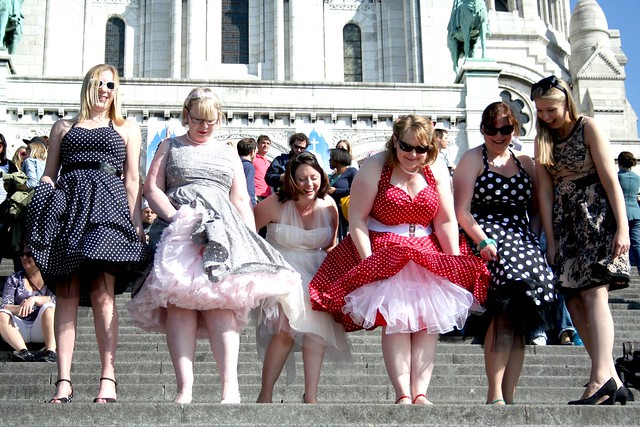
Of course you don't have to go all the way to Paris but it was definitely an amazing experience and one I would love to repeat somewhere else, perhaps Rome, perhaps Glasgow, perhaps Australia...oh how I dream.
I am fully aware that this post is nothing to do with Midwifery and being a student....but one thing I will say, you need to have time out. Something you can dip in and out of, that doesn't add any extra pressure to your already burdened shoulders...find a nice balance.
Wednesday, 16 February 2011
What do women want?
I've talked quite a lot about the kind of midwife that I want to be but the other day I was considering the kind of midwife that women want? I am in the unique position of knowing a variety of women, who have all had very different labours and experiences, positive and negative, so I took the opportunity to ask them just how they felt about their births and how they felt about the midwives involved in their care. The response was very mixed, as you'd expect but there were some common answers that seemed to run through their replies. The responses made for very interesting reading, and sometimes very emotional reading.
It came as no surprise that the women wanted to feel listened to; that they were more than just a number and treated as an individual. It's a well researched fact that women in labour have better outcomes when they receive one to one care and yet this doesn't appear to be happening for all women. Their are midwifery shortages throughout the UK which places a huge impact on the services that midwives are able to provide and the subsequent experience that women will get. Although it cannot be denied that staff shortages are not the sole reason that some women do not receive one to one care and despite listening skills being highlighted as an essential requirement for any midwifery student candidate, it appears that some midwives have lost the ability.
The vast majority of positive experiences were during labour and planned caesarean births and the women spoke of calm, reassuring midwives who kept them informed. There was disappointment spoken of, if a midwife who had been present for their care, had come to the end of her shift and a different midwife had taken over. Again I was reminded of the importance of one to one care and how much of a difference it made to women.
I was particularly sad to read that for most women the postnatal care, and in particular the breastfeeding support was declared to be awful. This is where there was frequent mention of a lack of staff, the staff that were there being in a rush because of the number of women they were caring for, coming across as uncaring and uninterested. It also seemed that whilst midwives had the knowledge about breastfeeding and support, they didn't have the time to spend with women supporting them.
Another factor in whether or not women had a positive birth experience, appeared to be their expectations of how things would be. I have heard it said many times that for the woman with the explicit birth plan, strict dos and don'ts of what they want, is a straight to theatre kind of woman. Whilst this is said very tongue in cheek, there can be a bit of truth in that statement - in particular for the first time mother. If you've not experienced it before, then how can you truly know what you'll need? If you aren't expecting labour to be hard work, then it's unlikely that a choice of no pain relief is going to work out. If you are expecting to jump straight back to normal following a Caesarean section, then you will get a bit of a shock.
There are no gold medals given out for childbirth and whether or not you use pain relief, whether you "manage" without an epidural, whether or not you give birth vaginally or your baby takes the sun roof! Yet I have heard many women speaking of feeling like a failure because things didn't go to plan.
My advice to women would be to be as open minded as you can be about pain relief, and positions and what you might need. It's good to know roughly what to expect but don't get fixed on a plan.
My advice to myself and any other aspiring midwives would be to always listen to women; to always remember the value of time and try wherever possible to provide one to one care, to keep women informed, be honest with them and let them know what is happening. When you can't spend time with someone, explain why not but try to organise something so that they do get some time with someone who can help. I know this won't solve the problems of staff shortages but we can all do our best.
And finally I just want to say a huge thank you to all of you that contributed answers to my questions about your experiences. I think I have learnt far more than I have put into this post, and I value each and every reply.
It came as no surprise that the women wanted to feel listened to; that they were more than just a number and treated as an individual. It's a well researched fact that women in labour have better outcomes when they receive one to one care and yet this doesn't appear to be happening for all women. Their are midwifery shortages throughout the UK which places a huge impact on the services that midwives are able to provide and the subsequent experience that women will get. Although it cannot be denied that staff shortages are not the sole reason that some women do not receive one to one care and despite listening skills being highlighted as an essential requirement for any midwifery student candidate, it appears that some midwives have lost the ability.
The vast majority of positive experiences were during labour and planned caesarean births and the women spoke of calm, reassuring midwives who kept them informed. There was disappointment spoken of, if a midwife who had been present for their care, had come to the end of her shift and a different midwife had taken over. Again I was reminded of the importance of one to one care and how much of a difference it made to women.
I was particularly sad to read that for most women the postnatal care, and in particular the breastfeeding support was declared to be awful. This is where there was frequent mention of a lack of staff, the staff that were there being in a rush because of the number of women they were caring for, coming across as uncaring and uninterested. It also seemed that whilst midwives had the knowledge about breastfeeding and support, they didn't have the time to spend with women supporting them.
Another factor in whether or not women had a positive birth experience, appeared to be their expectations of how things would be. I have heard it said many times that for the woman with the explicit birth plan, strict dos and don'ts of what they want, is a straight to theatre kind of woman. Whilst this is said very tongue in cheek, there can be a bit of truth in that statement - in particular for the first time mother. If you've not experienced it before, then how can you truly know what you'll need? If you aren't expecting labour to be hard work, then it's unlikely that a choice of no pain relief is going to work out. If you are expecting to jump straight back to normal following a Caesarean section, then you will get a bit of a shock.
There are no gold medals given out for childbirth and whether or not you use pain relief, whether you "manage" without an epidural, whether or not you give birth vaginally or your baby takes the sun roof! Yet I have heard many women speaking of feeling like a failure because things didn't go to plan.
My advice to women would be to be as open minded as you can be about pain relief, and positions and what you might need. It's good to know roughly what to expect but don't get fixed on a plan.
My advice to myself and any other aspiring midwives would be to always listen to women; to always remember the value of time and try wherever possible to provide one to one care, to keep women informed, be honest with them and let them know what is happening. When you can't spend time with someone, explain why not but try to organise something so that they do get some time with someone who can help. I know this won't solve the problems of staff shortages but we can all do our best.
And finally I just want to say a huge thank you to all of you that contributed answers to my questions about your experiences. I think I have learnt far more than I have put into this post, and I value each and every reply.
Thursday, 10 February 2011
11 births and farewell MLU.
I've now finished my time on the MLU and next week I am off to the antenatal clinic where the experience will be extremely different. It's hard to believe that before this placement, I hadn't "caught" my first baby and now I've caught eleven. Eleven very different woman, who coped in very different ways with their labours. Eleven different birthing partners who supported their wives/girlfriends/daughters in a variety of ways. So many of the birth partners say how useless they feel whilst the woman is labouring. They simply don't have any idea of how valuable just being there can be. And lets not forget the eleven very different babies. Six boys and five girls.
I'm not sure I can put into words just how much I feel I have learnt in such a short space of time. I've worked with different people and they all have their own ways of how to deliver and no doubt over time, I will choose my own preferred way. I like to think at the moment that I will work with whatever is appropriate at that time but ideally, maybe even idealistically, I'd like to be fairly hands off in my approach....allowing women to be in charge of their own bodies and deliveries. I think back to the births of my children and how I feel that my eldest was delivered by the midwife, and how my second was delivered by me....I know which experience I'd rather women have.
However one thing I have learnt is that no matter what I think, the woman has the right to make her own decisions. Whilst for me, being continuously monitored or unable to feel the contractions would be awful, for another woman, this is very important to them and part of being a midwife is taking a holistic approach and recognising what is important and why; ensuring that women have all the information they need to make an informed decision so that after the baby is born, they have felt a part of the decision making process and supported in their choices. What I would do is actually irrelevant in so many ways. So as well as all the clinical skills I am learning, I am also learning how to listen to women and support their choices.
Today I am feeling on top of the world, so pleased with all I have learnt and achieved. I'd love to bottle it - I could make a fortune! Or just have a little sip at those times when I am wondering if it is all still possible. For now I shall bathe in this happy feeling, enjoy a few days off and look forward to another new experience on Monday!
I'm not sure I can put into words just how much I feel I have learnt in such a short space of time. I've worked with different people and they all have their own ways of how to deliver and no doubt over time, I will choose my own preferred way. I like to think at the moment that I will work with whatever is appropriate at that time but ideally, maybe even idealistically, I'd like to be fairly hands off in my approach....allowing women to be in charge of their own bodies and deliveries. I think back to the births of my children and how I feel that my eldest was delivered by the midwife, and how my second was delivered by me....I know which experience I'd rather women have.
However one thing I have learnt is that no matter what I think, the woman has the right to make her own decisions. Whilst for me, being continuously monitored or unable to feel the contractions would be awful, for another woman, this is very important to them and part of being a midwife is taking a holistic approach and recognising what is important and why; ensuring that women have all the information they need to make an informed decision so that after the baby is born, they have felt a part of the decision making process and supported in their choices. What I would do is actually irrelevant in so many ways. So as well as all the clinical skills I am learning, I am also learning how to listen to women and support their choices.
Today I am feeling on top of the world, so pleased with all I have learnt and achieved. I'd love to bottle it - I could make a fortune! Or just have a little sip at those times when I am wondering if it is all still possible. For now I shall bathe in this happy feeling, enjoy a few days off and look forward to another new experience on Monday!
Sunday, 30 January 2011
Passion and fear
This week I have witnessed two ventouse deliveries - this is where a suction cap is attached to the baby's head and as the woman pushes, the doctor pulls which helps the baby to be delivered. There are various reasons why a ventouse delivery might be deemed necessary - maternal exhaustion, prolonged 2nd stage (the pushing stage), fetal distress, amongst others.
Of the two ventouse births I witnessed, one was due to slow progress in the 2nd stage and the other was due to fetal distress. I can't really share too much information about the deliveries themselves due to confidentiality but in the event of the fetal distress, my heart was in my mouth and I felt very emotional when the baby was safely delivered. I'd helped to care for the couple all shift and learnt quite a lot about their journey so far, and therefore I found it mattered a lot to me, my part in their story. I was really pleased to be able to see them again the next day.
I now have 5 deliveries to my name, three of which you already know about in my last post Not one but three. I've been lucky to work with a brilliant team and I feel like I have learnt loads in just the last week. Four out of my five deliveries were in the semi-recumbent position but the fifth (actually fourth but this could get confusing) was on all fours.....it was brilliant to get my head round exactly where I was putting my hands, and to have a different perspective - however I have got to say....it's far messier. My final delivery of the week was lovely and controlled and as a first baby, my mentor had loads of time to point things out to me as the baby progressed.
This week I am onto day shift and I think I will experience very different shifts to the night ones - there will be far more postnatal checks that need to be done than there are in the night time but there are also generally more staff. It will be really interesting to see the difference though of course I am hoping for a couple more deliveries and moving towards becoming more autonomous. I shall be investing in a book where I can keep a record of all my own deliveries as I am sure I will want to look back on them all one day.
One thing that has struck me this week is the value of good support. I have been told how lucky I am to be able to witness birth and I agree I am lucky. However I am also lucky to witness the amazing roller coaster of emotions during labour and the special bond between the woman and her birth partner. I have seen the love, the fear, the hope and the excitement all in the eyes of the birth partner as well as the woman. With the couple whose baby was in fetal distress, I witnessed the pure joy on the face of the mother, that the time had arrived to meet her baby, which was contradicted by the absolute fear in her partner's face as he could see the slowing heart beat and the number of people suddenly in the room. Not for one moment did he let his wife know just how worried we all were, but he continued to support her, to encourage her and be by her side the whole time. And then once the baby was born, I continued to watch that amazing bond between them, the continued joy and amazement on her face, and the relief and joy on his. You tell me I am lucky - I wholeheartedly agree and no matter how lucky you think I am, I know I am 20 times more lucky than that.
Tuesday, 18 January 2011
No more assignments!
For this academic year anyway. On Monday I submitted my final assignment for this year, providing I don't fail one anyway and have to re-do it. We only had three assignments to write this year and each one was harder than the last. I'd thought on reading the brief that the Values assignment would be quite enjoyable. However it was easily the assignment that challenged me the most. I work well with facts and being able to reference from research; but talking about my feelings about something was far harder. For those that know me well, this may come as a bit of a surprise. I wear my heart on my sleeve and don't generally have any problems talking about my feelings. However it's quite different when you have to reference your feelings somehow....once I was talking about theory I was far more comfortable. Anyway I am pleased it is finally submitted and shall now be obsessively checking for my results.
I've now got a few days off before returning to the MLU. My fingers are twitching to catch my first delivery. I've been watching One Born Every Minute and thoroughly enjoying it but it only serves to remind me what I want to be doing. I loved this weeks episode - no Caesarean's, just normal birth and not just that but a water birth! I felt quite emotional watching that one....and also quite lucky. In fact I feel lucky most days - midwifery is so competitive to get into, and getting to see new life enter the world - well that's special. I know it's not every one's cup of tea but I find it so amazing and special, and a privilege to be a witness to. It's not just the births though - it's the whole experience of caring for women at such an amazing time in their lives.
My most recent part of placement was spent on a postnatal ward. Unlike the MLU, on this ward can be all the high risk women, post-section women, post post-partum haemorrhage women, women with high blood pressures, diabetics, and the list goes on. Also on this ward are antenatal women, who are in for monitoring, are in early labour or have come in for induction of labour. It's a fast paced ward and a very high need ward. Some shifts I'd feel I was chasing my tail the whole time but I learnt so much.
One day I spent a long time helping a new Mum with breastfeeding amongst other things. She was quite an anxious new Mum so she had a lot of questions. She'd waited a long time for her baby and she was determined to get it right. As we weren't too busy that shift, I was able to spend quite a long time with her, providing one-to-one support and giving her confidence in herself. When she left to go home, she gave me a big hug and said thank you for my help. There aren't many jobs where you'd get that response from a client! I love my job!
I've now got a few days off before returning to the MLU. My fingers are twitching to catch my first delivery. I've been watching One Born Every Minute and thoroughly enjoying it but it only serves to remind me what I want to be doing. I loved this weeks episode - no Caesarean's, just normal birth and not just that but a water birth! I felt quite emotional watching that one....and also quite lucky. In fact I feel lucky most days - midwifery is so competitive to get into, and getting to see new life enter the world - well that's special. I know it's not every one's cup of tea but I find it so amazing and special, and a privilege to be a witness to. It's not just the births though - it's the whole experience of caring for women at such an amazing time in their lives.
My most recent part of placement was spent on a postnatal ward. Unlike the MLU, on this ward can be all the high risk women, post-section women, post post-partum haemorrhage women, women with high blood pressures, diabetics, and the list goes on. Also on this ward are antenatal women, who are in for monitoring, are in early labour or have come in for induction of labour. It's a fast paced ward and a very high need ward. Some shifts I'd feel I was chasing my tail the whole time but I learnt so much.
One day I spent a long time helping a new Mum with breastfeeding amongst other things. She was quite an anxious new Mum so she had a lot of questions. She'd waited a long time for her baby and she was determined to get it right. As we weren't too busy that shift, I was able to spend quite a long time with her, providing one-to-one support and giving her confidence in herself. When she left to go home, she gave me a big hug and said thank you for my help. There aren't many jobs where you'd get that response from a client! I love my job!
Monday, 10 January 2011
Formula free hospitals
I've just completed my time on the postnatal ward and now have a study week before I return to the Midwife Led Unit for four weeks. So far on placement, if the mother has been formula feeding her baby, she merely requested a bottle and a teat and it was provided for her - as of today this is no longer happening and I can't deny that I'm pleased not to be there this week as the changeover happens. What will happen now is that mothers who plan to formula feed, will need to bring with them a tin of stage one formula and two bottles. A milk kitchen is provided where new mums will be shown how to sterilise and prepare the bottles safely, according to guidelines.
One of the most common issues I have seen with supporting new mums to breastfeed is time. Midwives are already stretched by busy wards and a less than optimum number of staff; that I can only be concerned by how much more time the milk kitchen will require from them. Prior to beginning my training I would have been 100% percent behind the plan to remove formula from hospitals but whilst I am still in support of this happening, I have a more realistic view of the challenge it will pose to the staff.
I am in support because I think it provides a more accurate view of how bottles are prepared and the time that it takes. I also hope that a midwife may be less inclined to encourage "trying" a bottle when it's not as easy to just grab one from the cupboard. Of course, this all falls in line with all midwives being trained in breastfeeding support and how best to support women, which I certainly know is happening in both my placement hospital and my local hospital. I hope with the growth of accurate information being provided, more women will feel supported rather than pushed.
I am however concerned about the women who are post caesarean section, unable yet to get out of bed, possibly even finding it difficult to sit up for themselves. These are the women that already need a lot of support - how does the milk kitchen work for them? I can only assume that there will always be some formula milk in the hospital for the women who go into labour prematurely, or come in without their bags. Will there be milk provided for the women who need a high level of support? Or the women who plan to breastfeed but perhaps change their mind, maybe it just doesn't work out for one reason or another? What will happen then? I guess there are a lot of unanswered questions at the moment.
Is this a cost-saving exercise for the NHS or a move towards a society where breastfeeding is the norm? Can it be both? I am certain that there will be teething problems but I am optimistic that it will work out. I am ever hopeful that the breastfeeding support will increase, the breastfeeding knowledge will increase and women will feel more confident in their abilities.
Saturday, 1 January 2011
Happy New Year!
A new year is often synonymous with new beginnings and hope, happiness and celebration. I am looking forward to catching my first baby this year, hopefully soon and then becoming a second year student midwife in May. I have hopes of weight loss and being healthier. I have many celebrations to look forward to - two ruby weddings, two 65th birthdays, an 18th and a 21st birthday, two 40th birthdays and a wedding to go to.
However for many the new year can be tinged with sadness - for me it's the beginning of another year without my brother. Today I visited my brothers tree:

I love the cemetery where my brother's tree is. There are always people visiting, there are always fresh flowers and it's a lovely place to spend a contemplative moment. Whilst there I often wander to look at gravestones, or memorials, particular when there is a new one crop up. Today I wandered to spend a moment in the baby and children area - such sorrow and such pain and yet such beauty. The babies gone but not forgotten, still bought gifts though they are not here to enjoy them. The sadness of losing a child seems somehow greater than losing an adult and I'm not about to debate how true that is. Truth is loss of any kind is painful and times of celebration can highlight their absence.
Today I shall light a candle for my brother, but I shall also think of others who have lost loved ones and remember them too. Whilst we think of them, and talk about them, they are never forgotten. Don't ever be afraid to talk to someone about their lost loved one....it helps to know someone else remembers and cares.
Happy new year to you all. I hope 2011 brings you all happiness and laughter, good health and maybe just a smidge of wealth too.
However for many the new year can be tinged with sadness - for me it's the beginning of another year without my brother. Today I visited my brothers tree:

I love the cemetery where my brother's tree is. There are always people visiting, there are always fresh flowers and it's a lovely place to spend a contemplative moment. Whilst there I often wander to look at gravestones, or memorials, particular when there is a new one crop up. Today I wandered to spend a moment in the baby and children area - such sorrow and such pain and yet such beauty. The babies gone but not forgotten, still bought gifts though they are not here to enjoy them. The sadness of losing a child seems somehow greater than losing an adult and I'm not about to debate how true that is. Truth is loss of any kind is painful and times of celebration can highlight their absence.
Today I shall light a candle for my brother, but I shall also think of others who have lost loved ones and remember them too. Whilst we think of them, and talk about them, they are never forgotten. Don't ever be afraid to talk to someone about their lost loved one....it helps to know someone else remembers and cares.
Happy new year to you all. I hope 2011 brings you all happiness and laughter, good health and maybe just a smidge of wealth too.
Monday, 20 December 2010
What kind of midwife do I want to be?
All of the posts about breastfeeding, discussions with friends about breastfeeding and then listening to qualified midwives talk about breastfeeding got me to thinking about what kind of midwife I want to be. I don't have these grand illusions that I can get every woman breastfeeding their babies. I don't think I can change the world after all. So what can I do? What kind of difference can I make?
Well this is my dream....I want to support those women that do want to breastfeed. I want to help them have skin to skin with their babies, to breastfeed as soon as possible after the birth of their babies. I want to make sure that women know where and how to access support should they want and/or need it. I want to provide women with accurate information, without ramming it down their throats. Then following this, I hope that gradually more and more woman have a positive breastfeeding experience, and that this drip feeds to more and more women, that breastfeeding can be easy and enjoyable. That breastfeeding becomes commonplace to be seen everywhere and that women can learn by example, just like women used to do.
I also want to ensure women know about their choices for birth - whether that is where to give birth, what position to give birth in or whether it is how to still feel in control should they need a Caesarean delivery. I want to be able to support women in their choices without cynicism. Of course, I also want to be able to know what to do in the event of an emergency, or when things don't go to plan. And when things don't go to plan, I still want to be able to support women in their choices. I want to be able to help women know what their choices are. I want them to still be able to have a positive birth experience knowing everything possible was done.
I have no doubt that some people think my dreams are daft, that I am aiming too high. But if I can support one woman, help one woman to feel that I made a difference, then it's a start. I am writing this in the hope that I don't forget my dreams; that I remember what is in important to me and that I try and keep to it as much as I can. I'll aim for making a tiny difference and hope that I succeed.
Well this is my dream....I want to support those women that do want to breastfeed. I want to help them have skin to skin with their babies, to breastfeed as soon as possible after the birth of their babies. I want to make sure that women know where and how to access support should they want and/or need it. I want to provide women with accurate information, without ramming it down their throats. Then following this, I hope that gradually more and more woman have a positive breastfeeding experience, and that this drip feeds to more and more women, that breastfeeding can be easy and enjoyable. That breastfeeding becomes commonplace to be seen everywhere and that women can learn by example, just like women used to do.
I also want to ensure women know about their choices for birth - whether that is where to give birth, what position to give birth in or whether it is how to still feel in control should they need a Caesarean delivery. I want to be able to support women in their choices without cynicism. Of course, I also want to be able to know what to do in the event of an emergency, or when things don't go to plan. And when things don't go to plan, I still want to be able to support women in their choices. I want to be able to help women know what their choices are. I want them to still be able to have a positive birth experience knowing everything possible was done.
I have no doubt that some people think my dreams are daft, that I am aiming too high. But if I can support one woman, help one woman to feel that I made a difference, then it's a start. I am writing this in the hope that I don't forget my dreams; that I remember what is in important to me and that I try and keep to it as much as I can. I'll aim for making a tiny difference and hope that I succeed.
Friday, 3 December 2010
Breast is Best?
The WHO (World Health Organisation) guidelines state:
"Breastfeeding is an unequalled way of providing ideal food for the healthy growth and development of infants; it is also an integral part of the reproduction process with important implications for the health of mothers. As a global health recommendation, infants should be exclusively breastfed for the first six months of life to achieve optimal growth, development and health. Thereafter, to meet their evolving nutritional requirements, infants should receive nutritionally adequate and safe complementary foods while breastfeeding continues for up to 2 years or beyond. Exclusive breastfeeding from birth is possible except for a few medical conditions, and unrestricted exclusive breastfeeding results in ample milk production."

So there you have it - the official guidelines from those in the know....so why is there so much debate over breastfeeding? Why are people surprised to see babies older than 6 months breastfeeding? Obviously I am only talking about in the UK here, as I can't speak for anywhere else. I think the answers are quite simple really:
1) Breastfeeding can be hard work to get established. It can be painful and sore.
2) Breastfeeding is often hidden away as something private, particularly with older children. Therefore unless you know someone who breastfeeds, your experience with it may be very limited or even non-existent.
3) It's an emotional topic and when breastfeeding doesn't work out for someone, it can affect how they feel about it.
Apparently only 2% of women cannot physically breastfeed either due to medical conditions or for an unknown reason. A common misconception, particularly in the 1960's and 1970's, was an inability to feed due to a lack of milk. It is unlikely that this would truly have been the case for the majority of women who switched to formula milk. This was a time when women were advised to put their babies into 4 hourly routines and not feed them in the night time which is has since been evidenced as being detrimental to milk supply. However it is something that is still said today, and many mothers are still worrying about routines and length of time between feeds, and consequently questioning their ability to produce enough milk. There is also little known about growth spurts, so when the baby is suddenly feeding all day and all night to increase milk supply, again mother's can question their milk production - sometimes leading to early weaning onto solids; but that's another debate!
So anyway that's the guidelines and official figures - still doesn't tell you my opinion does it? 98% of women can breastfeed....does that mean that 98% should? No I don't believe it does. Nor do I believe that repeatedly telling people the health benefits is the way to increase the number of breastfeeding mothers. I believe that some antenatal class teachers, some of whom are midwives, are almost frightened to talk about the difficulties that women may have with breastfeeding, worried that it will stop women from even trying. Some midwives don't discuss breastfeeding at appointments for a variety of reasons, such as not having enough time, thinking it's too early to consider, that it will be covered by antenatal classes, that anything that is said won't be remembered anyway etc.
Some women don't want to breastfeed. They don't want to try and it doesn't matter what anyone says to them, they simply don't want to do it. Is that wrong? Well it might be an alien feeling to my own, but it doesn't make it wrong. We are lucky to live in a country of choice, where formula can be made up safely with clean water and for some women the choice is clear, and they choose formula.
A lack of support is probably the most common reason for women to stop breastfeeding - whether it is a lack of support from health professionals or family and friends. This can be combined with pain, or a lack of knowledge about how breastfed babies feed. I have alluded to routines and growth spurts already but this aggravated by comments such as "are you feeding that baby again?" or "why don't you give that baby a bottle?". There is no benefit to comments such as this and for a mother who has pain and is unsure what she is doing, it can't help.
Some women try to breastfeed but stop because of pain and soreness. There can be a number of reasons that there is pain during breastfeeding, most of which can be corrected. If the baby is positioned incorrectly, then the nipple can become very sore, cracked, even bleeding. If the mother is given support and advice before too much damage is caused, then the mother can go on to breastfeed as long as she likes. Poor positioning can sometimes also lead to mastitis as the milk ducts aren't emptied properly but again with the correct support and advice this is easily remedied. Nipple thrush can be another cause of pain to the mother, but also to the baby. Once identified, both the mother and baby must be treated simultaneously or it will continue to be passed from one to the other. Thrush can be a nuisance to get rid of, and it can be a nuisance to get the correct treatment for, but with the correct support and advice, it is easily dealt with. Engorgement is also a common cause of pain for the mother, especially when the milk first comes in. The easiest way to deal with it is feeding the baby although it can make it harder to get the baby latched on, in which case, it can be easier to express a little milk off just to make the breast softer. There are other causes of pain of course, but these tend to be the most common so I have focused on these for now.
However before anyone thinks this is a pro-formula post, it isn't. For me, it is like choosing to buy powdered dried milk in the supermarket instead of the bottles of milk in the chiller. It is a perfectly good substitute but it's not what I would choose - give me fresh every time! Wouldn't you say that's what most people do? Isn't that how breastfeeding should be? The norm? In cultures where breastfeeding is the norm, problems with positioning are practically non-existent. Women are used to seeing breastfeeding, and learn from childhood how to position their babies. They automatically support each other, and after giving birth, the family rallies around so that the mother can get used to her baby and get feeding established, without worrying about visitors and the housework.
I am proud that I have breastfed my children. Whilst the health benefits didn't matter to me before, they do now. I am glad that I have given them the best start in life but at the same time I am incredibly grateful that I had the right support in order for that to happen. I hope I don't come across as smug about it, but actually help to further the view that breastfeeding can be easy, pain free and enjoyable and that it might just be worth a go?

Tuesday, 30 November 2010
Breastfeeding - my experience

Those that know me know that I am still feeding my almost three year old daughter and those that don't know this about me, may be surprised to know this. I feel passionate about breastfeeding and I know a lot about breastfeeding, positive and negative. Anyway I felt it was time to talk a little bit about my experiences, my opinions and my expectations; and I will say now that some of what I say may surprise you.
My Experience
When I fell pregnant with my first daughter and thought about how I planned to feed her, I merely thought "well I'll give breastfeeding a go but if it doesn't work out then I'm not going to beat myself up over it"....and I don't think that's a rare way to feel at all. I went to my antenatal class about feeding and noticed that there was a distinct drop in numbers attending. I listened dutifully to all the benefits to me and the baby and felt no real difference, and certainly no more prepared. I don't recall them discussing problems at all, though it is possible they did.
When my daughter was born, we did have skin-to-skin but in the immediate time following the birth there was no mention of feeding her. I certainly didn't have a clue what to do, or whether I should be trying to feed her or not. Anyway eventually someone did come to try and help me to breastfeed, I have no idea whether or not she was a midwife or maternity support worker. She certainly did her best, but my boobs would challenge most I think, as they are on the large side. Anyway she did manage to get her latched on but she didn't feed for long, and just wanted to sleep. Overnight she was very unsettled and I did my best to feed her but had no idea whether or not I was doing it right and come the morning I asked the midwives for some support. They did their best but she just didn't want to feed at the time they were able to help me, and when she did feed it was only for about 5 minutes. The midwives in the morning wanted me to stay a bit longer and get some more support with feeding, the afternoon midwives discharged me home. Did I feel confident? No, but having said that, I wanted to go home because I didn't feel that I was getting the support I needed whilst I was there anyway.
Over the next few days I gradually got sorer and my nipples cracked and were bleeding. I dreaded every single feed. However if someone suggested I switch to formula, I was like a stubborn child, I dug my heels in and was determined that it wasn't going to beat me. It was at this time, I actually discovered how much being able to breastfeed, mattered to me. I couldn't tell you why it mattered all I know is that it did. At that moment I certainly didn't give a monkey's about the health benefits, and I certainly wasn't thinking that formula was evil; I just knew that I wanted to breastfeed. Even now I can remember how determined I was whilst at the same time, I sobbed through every feed, and curled my toes.
Before I scare anyone who hasn't had children off breastfeeding for life....I would like to add that it changed very quickly - once I got the right support. I've actually already mentioned the inspirational midwife Annie who corrected my positioning and helped me on the road to pain free feeding. I saw Annie at home on day 5, and attended the breastfeeding group the same day. By the time I returned to the group a week later, the pain was gone. With my eldest daughter I went on to be pain free for the remainder of our breastfeeding journey which was ended by her when she was 13 months 1 week old. I attended the breastfeeding support group every week.....ok I wasn't experiencing pain but I did feel like I needed support. I made a lot of friends at that group, some of whom I consider amongst my closest friends now, one of which is in fact my second daughter's godmother. Having friends that had experienced the growth spurts, the distracted nursing child, the sleepless nights was essential. Of course some of things are nothing to do with breastfeeding, but neither were the conversations about our husbands or families! The point was, someone had always had the same or similar experience and it meant you didn't feel quite as alone. At the time I was grieving the loss of my brother, who had died when my eldest was 10 weeks old; and whilst many of them may not have known that, they helped me more than they could ever know.
With my second daughter, I didn't anticipate any problems - after all, I had attended the group for well over a year, I'd already breastfed one child, I knew about all the problems to look out for...what could go wrong? Well...my daughter hadn't done all those things and she needed to learn how to feed, even if I didn't. There were no major problems, but boy did she have a strong suck on her and I experienced a couple of days of soreness as a result. When she was weighed on day 5, she'd already gained 13 ounces, so there was nothing wrong with her latch.
Over the coming months we experienced reflux , breast refusal, biting, mastitis and even a fairly long period of time where she would only feed from one side. I still have no idea why she only fed from one side; there seemed to be no real reason to it. She'd refuse to feed completely when she was teething but we invested in an amber teething necklace which seemed to do the trick. I was once a sceptic when it came to these alternative methods but the one and only other time she refused to feed, my husband had forgotten to put her necklace back on after her bath. The group helped support me, in that I knew it was quite common for babies to refuse to feed when they were teething, and that it was normal for different babies to react in different ways. With my first daughter, we'd never known she was teething, we'd just suddenly realise she had a new tooth.
When people found out that I had breastfed babies with teeth, they would always ask me about biting and doesn't it hurt. I have been bitten, and in all honesty, my second daughter once bit me so hard it drew blood. Not once did it occur to me, to stop breastfeeding because of it. I dealt with it in the same way I dealt with it any time she did something naughty. I told her very firmly no, and put her on the floor. She'd yell and cry, and I'd pick her up, tell her firmly not to bite and we'd continue. I'd like to say I only had to tell her once but it wouldn't be true. However I also learnt the signals for when she was considering biting, and the continued consistent reaction from me, ensured that it was soon a thing of the past; and she certainly never once bit me as hard again.
The couple of times I had mastitis, I was lucky in that I knew the signals and I was able to beat it becoming a more serious issue by feeding, feeding and feeding some more. I'd use a variety of positions to ensure that all the ducts were emptied properly. Again I am grateful to my attendance at the group, for knowing just how to handle it.
If you've learnt anything from this blog post, you should have worked out just how much I value the breastfeeding support group; it should therefore come as no surprise that I went on to become a breastfeeding mother helper and along with a friend, facilitated the group. I was awaiting training to become a peer supporter but I actually got my place at University before that happened. I did however attend the monthly training meetings with other mother helpers and peer supporters so I gained a wealth of knowledge about how to support women.
You might think from this blog post that I believe every woman should breastfeed...well you'd be wrong but I shall save telling you all about my opinion for my next blog post......
Subscribe to:
Posts (Atom)